Showing posts with label Bird Flu. Show all posts
Tuesday, August 15, 2017
Poultry-related stocks fall as investors react to bird flu outbreak
Listed poultry farms and chicken restaurants took a hit Monday as investors reacted to the Philippines' first ever bird flu outbreak in Pampanga. - Business Nightly, ANC, August 14, 2017
source: news.abs-cbn.com
Thursday, August 10, 2017
PH records first avian flu outbreak
MANILA - The Philippines has recorded its first bird flu outbreak and will "eliminate" half a million chickens to control the spread of the virus, Agriculture Secretary Emmanuel Piñol said Friday.
Around 38,000 chickens have died of the Avian Influenza Type A Subtype H5 in San Luis town, Pampanga, Piñol reported at the Mango Stakeholders Forum Friday.
To prevent the spread of the deadly virus, Piñol said around 500,000 chickens would be "eliminated."
The Department of Agriculture has also ordered a halt to the transport of poultry from Luzon to other parts of the country until further notice to control the outbreak.
Avian influenza is a viral infection that spreads among birds but can infect humans as well.
According to the World Health Organization, human infection is primarily acquired through direct contact with infected animals.
The infection may cause diseases such as mild conjunctivitis or swelling of the eyes, severe pneumonia and even death. Interaction with humans infected with the flu, however, does not result in "efficient transmission" between people.
The WHO also clarified that there is no evidence that the avian flu can be acquired by eating properly cooked eggs or poultry.
source: news.abs-cbn.com
Monday, December 12, 2016
S.Korea temporarily bans movement of poultry to fight bird flu
SEOUL - South Korea's agriculture ministry said on Monday it will issue a temporary nationwide ban on the transportation of poultry to contain the spread of bird flu, with 43 outbreaks recorded in Asia's fourth-largest economy.
The Ministry of Agriculture, Food and Rural Affairs said in a statement that the movement control order will be effective for 48 hours, from 1500 GMT on Monday or midnight in Seoul.
Since the first outbreak of a severe strain of bird flu known as H5N6 was reported on Nov.18., South Korea has ramped up quarantine measures to stop a wider spread of the virus, including issuing a 48-hour nationwide standstill order three weeks ago.
A total of 43 bird flu outbreaks had been confirmed as of Dec. 11, with another nine possible cases being tested, according to the ministry statement.
To prevent the spread of bird flu, the ministry said at least 8.8 million farm birds were culled and plans to slaughter 1.5 million more. That would be over 10 percent of the country's poultry population of nearly 85 million.
Although cases of human infections from the H5N6 virus have previously been reported elsewhere including China, no cases of human infection have been found in South Korea.
source: news.abs-cbn.com
Wednesday, May 7, 2014
China reports 1st death from H5N6 bird flu virus
SHANGHAI/TAIPEI - A 49-year-old man who died of acute pneumonia in Nanchong city in China's Sichuan Province was infected with the H5N6 strain of bird flu virus, health officials said.
It was the first death of a person confirmed to have been infected with the strain, according to Taiwanese health authorities, who have been in contact with the Chinese authorities.
It could be the first confirmed case of human infection with the H5N6 strain, according to Toshihiro Ito, a professor at Tottori University in Japan who is versed in avian influenza.
The H5N6 strain, a subtype of the H5 variety that is highly toxic to birds, is different from the H7N9 strain which has caused human infections in China.
The man in Sichuan had been exposed to dead birds, according to the officials.
Health authorities in China said people who had close contact with the man have shown no abnormalities and that the risk of infection spreading to other people is low. The Taiwanese authorities have urged caution among those traveling to Sichuan.
source: www.abs-cbnnews.com
Saturday, December 28, 2013
Hong Kong confirms first death from H7N9 bird flu
HONG KONG - An 80-year-old man infected with the H7N9 bird flu virus has died in Hong Kong, the government said on Thursday, in the first such death in the city after the virus surfaced in early December.
The man, the second person in Hong Kong to be diagnosed with the virus strain, lived in the southern Chinese city of Shenzhen and had eaten poultry there, media reported.
The H7N9 strain was first reported in humans in February in mainland China, and has infected at least 139 people in China, Taiwan and Hong Kong, killing more than 40.
Experts say there is no evidence of any easy or sustained human-to-human transmission of H7N9, and so far all people who came into contact with the man had tested negative for the strain, authorities said.
source: www.abs-cbnnews.com
Tuesday, December 3, 2013
Hong Kong confirms first human case of bird flu
HONG KONG- Hong Kong confirmed its first case of deadly H7N9 bird flu on Monday in a further sign that the virus is continuing to spread beyond mainland China's borders.
The case coincides with the 10th anniversary of the outbreak of Severe Acute Respiratory Syndrome, which killed nearly 300 people in Hong Kong and had a significant impact on the city's travel and retail industry.
A 36-year-old Indonesian domestic helper with a history of contact with poultry and travel to Shenzhen in mainland China just north of Hong Kong has been confirmed infected by H7N9 and has been hospitalized in critical condition, Secretary for Food and Health Ko Wing-man told reporters late on Monday.
source: www.abs-cbnnews.com
Thursday, October 17, 2013
China reports new case of H7N9 bird flu
BEIJING - China has confirmed a new human case of the deadly H7N9 strain of bird flu, the country's first report of an infection since August, the World Health Organization (WHO) said on Wednesday.
A 35-year-old man in Shaoxing in China's eastern province of Zhejiang has been hospitalised with the virus and is in critical condition, WHO said.
Zhejiang has recorded the highest number of H7N9 infections anywhere in China.
Some 45 people have died from H7N9 flu, which was unknown in humans until the first cases were detected in people early this year.
The Geneva-based WHO said that to date, it had been informed of a total 136 laboratory-confirmed human cases of H7N9 infection, including the 45 deaths.
Currently, three patients are hospitalized and 88 have been discharged, it said in a statement, adding that there was no evidence so far of sustainable human-to-human transmission.
While there has been only a handful of H7N9 infections during the summer months after a surge in April, flu experts warn that the threat posed by the virus has not passed.
The first scientific analysis of probable transfer of the new flu strain between humans, published in the British Medical Journal in August, gave the strongest proof yet that it can jump between people and so potentially cause a human pandemic.
Another study published in August identified several other H7 flu viruses circulating in birds that "may pose threats beyond the current outbreak".
source: www.abs-cbnnews.com
Friday, May 3, 2013
Europe's top flu expert on alert for bird flu spread
LONDON - Human cases of a deadly new strain of bird flu that has killed 27 people in China are likely to crop up in Europe and around the world but that should not cause undue alarm, Europe's leading flu expert said on Thursday.
In his first media interview since returning from an international scientific mission to China last week, Professor Angus Nicoll said the H7N9 flu outbreak in humans was one that should be taken extremely seriously and watched closely.
"We are at the start of a very long haul with H7N9," Nicoll told Reuters in a telephone interview from the Stockholm-based European Centre for Disease Prevention and Control (ECDC), where he is head of the influenza and respiratory viruses programme.
He said there were many scientific questions to be answered about the new flu strain, which was first detected in patients in China in March having been previously unknown in humans.
The flu has so far infected at least 127 people in China and killed 27 of them, according to latest data from Chinese health authorities and the World Health Organization.
Scientific studies of the virus have established it is being transmitted from birds - probably mostly chickens - to people, making it a so-called zoonotic disease that humans catch from animals rather than from other humans.
Nicoll, who visited Beijing and Shanghai last week with a team of international scientific experts, confirmed what the WHO has repeatedly said - that there is no evidence yet of the virus efficiently passing from person to person - a factor that would make H7N9 a serious pandemic flu threat if it were to evolve.
Nicoll said the "most pressing public health question" for now was to identify the source of the circulating virus - the so-called "reservoir" - that is leading to chickens contracting it and sporadically passing it on to humans. This is likely to take time, with any results unlikely for several months.
"Imported cases"
In the meantime, Nicoll said the ECDC, which monitors disease in the European Union, and health authorities around the world should expect that "imported cases" of H7N9 flu may well begin to crop up elsewhere.
Just as Taiwan reported its first case on April 24, other countries should expect that business travellers and tourists may occasionally return from China having picked up the infection, he said.
"I'm not sure when that will happen. But the case in Taiwan shows that it can. If that person had got on a different flight and ended up in Paris, then we would have had a scenario that we would expect people to be alarmed at," he said.
"But again we should stress that this thing doesn't seem to be transmissible from human to human, so if we get some sporadic cases appearing in Europe, that doesn't change anything."
Nicoll noted that genetic analysis studies of H7N9 samples taken from patients in China showed the virus had already acquired two genetic mutations that made it more likely to be able to become transmissible between people.
Flu experts speaking at a briefing in London on Wednesday said those mutations, together with evidence that H7N9 is still mutating rapidly and probably spreading almost invisibly among birds because it does not make them obviously sick, meant this new flu was a "serious threat" to world health.
"You can never predict anything about flu, but it is concerning to see those mutations there, Nicoll said. "That's why it's important Europe should take this very seriously."
Nicoll added that he thought the Chinese were doing an "impressive job" handling, reporting, investigating and seeking to contain the outbreak.
source: www.abs-cbnnews.com
Sunday, April 28, 2013
Chinese premier urges vigilance against bird flu
BEIJING - China's premier on Sunday urged authorities to be vigilant against a new strain of bird flu that has killed 23 people, while saying that efforts to tackle the virus have so far been effective.
Speaking during a visit to the Chinese Center for Disease Control and Prevention, Premier Li Keqiang warned people to prepare for any new developments amid fears H7N9 could mutate into a form easily transmissible between humans.
"Countermeasures have been effective so far, but the situation is still developing as new cases turn up," Xinhua news agency quoted him as saying.
"We cannot afford to take it easy or relax, as we are facing a new virus," he said. "We should be prepared for any possible development."
He added that more effort was needed to diagnose and treat people with the virus as early as possible.
There have been well over 100 cases of the virus reported in China, with three more reported on Sunday, according to Xinhua, quoting local authorities.
The government announced on March 31 that the virus had been found in humans for the first time.
Most cases have been confined to eastern China and the only case to have been reported outside mainland China has been in Taiwan. The Taiwanese man was infected in China.
Experts have warned of the possibility of more cases over a wider area.
Chinese researchers, reporting in The Lancet on Thursday, said they had confirmed poultry as a source of the virus among humans.
Experts fear the prospect of the virus mutating into a form easily transmissible between humans, with the potential to trigger a pandemic.
The World Health Organization has said there has been no evidence of human-to-human transmission so far but warned that H7N9 was "one of the most lethal" influenza viruses ever seen.
Chinese health officials have acknowledged so-called "family clusters", where members of a single family have become infected, but have not established any confirmed instances of human-to-human transmission.
source: www.abs-cbnnews.com
Tuesday, April 23, 2013
China bird flu death toll rises to 22
BEIJING - An elderly man in eastern China died of bird flu on Tuesday, bringing the death toll from a strain that recently emerged in humans to 22, a provincial health agency reported.
The 86-year-old man died after having been diagnosed with the H7N9 virus on April 17, the Zhejiang Health Bureau said on its website.
Two others in Zhejiang have been diagnosed with the disease, including an 84-year-old man and a 62-year-old man, both of Hangzhou who fell ill on April 15, the health bureau said.
In neighboring Anhui province, another case was diagnosed on Tuesday, a 91-year-old man, the state-run Xinhua news agency said.
The man became sick on April 14, Xinhua said.
So far 108 people have contracted the disease since the first deaths were reported in China last month. Authorities say many of those who became sick worked with poultry.
Investigators have yet to determine human-to-human transmission of the virus.
"Investigations into the possible sources of infection and reservoirs of the virus are ongoing," the World Health Organization said on Monday. "Until the source of infection has been identified, it is expected that there will be further cases of human infection with the virus in China."
The WHO's China representative, Michael O'Leary, issued data on Friday showing that half of the patients analysed had no known contact with poultry, but he said it appeared human-to-human transmission was rare.
Some bird samples have tested positive and China has culled thousands of birds and shut down some live poultry markets.
source: www.abs-cbnnews.com
Monday, April 22, 2013
WHO team probes bird flu in Shanghai
SHANGHAI - A World Health Organisation team was due Monday to wrap up a trip to Shanghai, centre of China's bird flu outbreak which has killed 20 people, as part of an investigation into how the virus is spreading.
Since announcing on March 31 that H7N9 had been found in humans for the first time, China had confirmed a total of 102 cases in Shanghai and the capital Beijing as well as four provinces, the health ministry said Sunday.
"There has been no discovery of evidence of human-to-human transmission," the ministry said in a statement.
Experts fear the prospect of such a virus mutating into a form easily transmissible between humans, which would then have the potential to trigger a pandemic.
Chinese health officials have acknowledged so-called "family clusters", or members of a single family becoming infected, though they have so far declined to call this human-to-human transmission.
Chinese health officials and WHO representatives were to hold a news conference on Monday after the three-day visit by the UN health agency, the Shanghai government said.
The WHO representative in China, Michael O'Leary, said Friday that the purpose of the 15-member team's week-long visit to China was to study whether H7N9 was spreading among humans.
"The primary focus of the investigation is to determine whether this is in fact spreading at a lower level among humans. But there is no evidence for that so far except in these very rare instances," O'Leary said.
Health experts draw a difference between "sustained" human-to-human transmission and cases in which family members or medical personnel caring for the ill become infected.
The son of a man who was Shanghai's first case of H7N9 was confirmed to have the virus after an initial test ruled it out, Chinese officials said last week.
The Shanghai government also said the husband of a woman confirmed with the virus had become sick with H7N9, but added there was not enough evidence to verify transmission between them.
"Family clusters in general do not change our understanding of the characteristics of the disease," said Feng Zijian, an official of China's disease control centre.
"It is still passed from poultry to people and there is no evidence of human-to-human transmission," he said last Wednesday.
source: www.abs-cbnnews.com
Sunday, April 7, 2013
China closes poultry markets amid bird flu
16 fall ill from bird flu in China
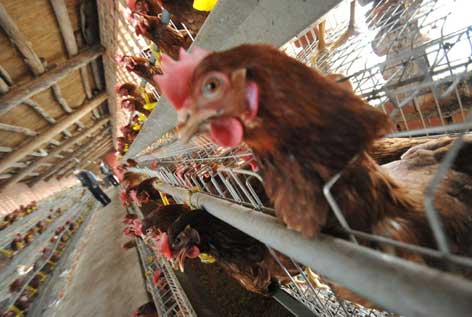
SHANGHAI - Chinese officials have found traces of the new bird flu virus in more areas in Shanghai and in the nearby city of Hangzhou, news reports said on Saturday, as authorities slaughtered birds to stop the spread of the virus that has killed six people.
State-run Xinhua news agency said authorities planned to cull birds at the two live poultry markets in Shanghai and another in Hangzhou after samples of the H7N9 virus were detected in birds at all three sites.
Over 20,000 birds have been culled in the Huhuai market, where traces of the virus were found earlier this week.
Officials in Shanghai, China's financial hub, ordered all live poultry markets in the city closed on Saturday, leaving the food stalls empty and signs reading "The market is closed until further notice".
The new strain of bird flu has infected 16 people in China, all in the east of the country. Six people have died, and the outbreak has spread concern overseas and sparked a sell-off in airline shares in Europe and Hong Kong.
There were no signs of panic in Shanghai, where four of the six deaths have taken place, and people said they were not yet worried. But the culling, which has been widely publicised, did underline for some how close to home the issue had become.
"Now it's just downstairs," said Liu Leting, a user of Weibo, China's version of Twitter which has over 500 million users.
"Suddenly I discover that I'm living in an epidemic zone!"
In one middle price-range restaurant in a the city, a waitress said that the restaurant planned to stop serving chicken dishes because of the outbreak.
"After we sell out the chicken in stock, we will not buy new chicken and will stop serving chicken dishes for the time being," said the waitress, who declined to be named.
While the strain does not appear to be transmitted from human to human, authorities in mainland China and Hong Kong said they were taking extra precautions.
"I support shutting down poultry markets. If the poultry markets stayed open, the virus would continue to spread," Shanghai resident Zhao Juying told Reuters.
Hong Kong's government said it is intensifying surveillance of travelers and poultry coming into the city.
China and Hong Kong were badly hit by the 2002-2003 epidemic of Severe Acute Respiratory Syndrome (SARS) that started in China and killed about one-tenth of the 8,000 it infected worldwide.
source: abs-cbnnews.com
Monday, April 1, 2013
No sign of human transmission in new bird flu cases
BEIJING - The World Health Organization says no evidence has emerged to show that a type of bird flu which has killed two Chinese men can be transmitted between people.
Two men in Shanghai, aged 87 and 27, fell sick in late February. A woman in Anhui province also contracted the virus in early March and is in critical condition.
"At this point, these three are isolated cases with no evidence of human-to-human transmission", the WHO representative in China, Dr. Michael O'Leary, told reporters on Monday.
China's National Health and Family Planning Commission confirmed on Sunday that the three cases were the H7N9 virus, which had not previously been known to infect humans.
"A new virus tends to be more virulent in the beginning. Either it is going to become a truly human virus, in which case we have to start dealing with it regularly, or it is going to be primarily an animal virus with just a rare human case," O'Leary said.
Some Chinese had complained that authorities took too long before announcing the deaths on Sunday. O'Leary said the government acted properly as the deaths needed to be investigated.
"China actually for a long time has been reporting promptly and openly. I think SARS was a turning point globally for that sort of thing. Not just in China," he said.
He was referring to the 2003 epidemic of Severe Acute Respiratory Syndrome, which caused a scandal when official numbers of cases were later dramatically revised upwards.
SARS emerged in China and killed about a tenth of the 8,000 people it infected worldwide.
People buying poultry at a Shanghai market on Monday said they were worried the incidents had been made public only weeks after the deaths and said they hoped the government would be quick to report any new cases.
"In the future, no matter what it is, the government should make it public quickly and let the people know early. That way they can prevent it themselves", said shopper Zhang Zhili, 60.
Many users of Chinese microblogs, known as "weibo", said they suspected the latest outbreak of bird flu was related to more than 16,000 pig carcasses recently found dumped in rivers around Shanghai.
O'Leary said that while the dead pigs were part of the overall investigation, there was no evidence of any connection.
It is not known how the three victims were infected. The virus does not seem highly contagious because no health abnormalities were detected among 88 of the victims' close contacts, the health commission said.
source: abs-cbnnews.com
Subscribe to:
Posts (Atom)


