Showing posts with label Hunger. Show all posts

Tuesday, April 21, 2020

Global hunger could double due to COVID-19 blow: UN


GENEVA - The number of people facing acute food insecurity could nearly double this year to 265 million due to the economic fallout of COVID-19, the United Nations' World Food Program (WFP) said on Tuesday.

The impact of lost tourism revenues, falling remittances and travel and other restrictions linked to the coronavirus pandemic are expected to leave some 130 million people acutely hungry this year, adding to around 135 million already in that category.

"COVID-19 is potentially catastrophic for millions who are already hanging by a thread," said Arif Husain, chief economist and director of research, assessment and monitoring at the WFP.

-reuters-

Thursday, October 26, 2017

By using surplus food, US cities could tackle hunger, waste problems


TEPIC, Mexico—Apples, bread, pasta and coffee are high on the list of foods worth $218 billion Americans dump in the bin or pour down the drain each year, costing them and the environment dear, a green group said on Wednesday.

Under growing pressure to deal with the 40% of food households, restaurants, grocers and others throw away, U.S. cities must find new ways to stop waste going into landfill and get edible food to those who need it, the Natural Resources Defense Council (NRDC) said in two reports.

“This is food that is surplus... It's not food that's coming off people's plates," said Darby Hoover, a senior resource specialist at the NRDC, a U.S.-based environmental non-profit. "It's food that's packaged and prepared, and did not end up getting served."

More than two-thirds of food thrown away by households is potentially edible, with uneaten food costing an average American family of four at least $1,500 a year and causing major environmental damage, said the research supported by The Rockefeller Foundation.

Meanwhile food that goes unsold in grocery stores, schools, restaurants and other consumer businesses could be redirected towards the one in eight Americans who lack a steady supply, it said.

Denver, Nashville and New York, the three cities at the centre of the research, could dish up as many as 68 million extra meals a year if surplus food were donated, said the NRDC.

“If we could distribute just 30 percent of the food we currently discard, it would equate to enough food to provide the total diet for 49 million Americans,” said one of the reports.

While donating more food could help vulnerable people amid rising income inequality, it would not solve the underlying causes of poverty such as unemployment or low wages, the research added.

Cities need to find better ways to match food donations, especially from businesses, to poor communities, and reduce the food waste that takes up almost a quarter of landfill space and emits nearly 3 percent of U.S. greenhouse gases, the research said.

Improved planning and more education could help cut the amount of food people throw away often because it has gone mouldy or they do not want to eat leftovers, said Hoover.

“Making the most of our food supply has wide-reaching benefits - helping to feed people and save money, water and energy in one fell swoop,” NRDC senior scientist Dana Gunders said in a statement. (Reporting by Sophie Hares; editing by Megan Rowling. Please credit the Thomson Reuters Foundation, the charitable arm of Thomson Reuters, that covers humanitarian news, climate change, resilience, women's rights, trafficking and property rights. Visit http://news.trust.org/)

source: news.abs-cbn.com

Wednesday, July 26, 2017

Smartphone app allows non-profit in India to feed the hungry


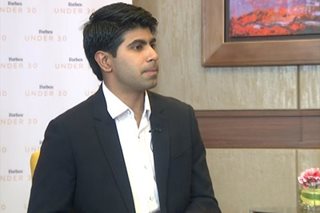
MANILA - India has the most number of people going hungry, Ankit Kawatra, the founder of non-profit group "Feeding India" said on Tuesday in an interview with ANC's Cathy Yang.

Kawatra however, noticed that there was a lot of food getting wasted in feasts and in restaurants.

He set out to help solve India's hunger problem by providing free meals through volunteers and donation centers.

Restaurants and individuals can use Feeding India's smartphone app to sign up to donate food, which is collected and distributed to people in need.

"I'd rather use my skills to solve a problem like hunger rather than just making money for myself all the time," Kawatra said on the sidelines of Forbes Under 30 Summit Asia.

source: news.abs-cbn.com

Friday, February 24, 2012

Bill Gates urges digital revolution against hunger


ROME — Microsoft founder Bill Gates on Thursday called for a “digital revolution” to alleviate world hunger by increasing agricultural productivity through satellites and genetically-engineered seed varieties.

“We have to think hard about how to start taking advantage of the digital revolution that is driving innovation including in farming,” the US billionaire philanthropist said in a speech at the UN rural poverty agency IFAD in Rome.

“If you care about the poorest, you care about agriculture. We believe that it’s possible for small farmers to double and in some cases even triple their yields in the next 20 years while preserving the land,” Gates said.

He gave as one example of innovation the genetic sequencing that allows cassava farmers in Africa to predict how individual seedlings will perform, shortening the time it takes to develop a new variety from 10 years to two.

Another key development is the use of satellite technology developed by defence departments to document data about individual fields, as well as information videos of farmers discussing best practices to help others.

“If we don’t do this, we’ll have a digital divide in agriculture,” he said.

Gates also defended the use of genetically modified organisms (GMOs) in the developing world and large-scale farm land investments by foreign states in the developing world—both highly controversial issues in the aid community.

“You should go out and talk to people growing rice and say do they mind that it was created in a laboratory when their child has enough to eat?” he told reporters at a small media roundtable after his speech.

“The change in the way mankind lives over the last several hundred years is based on adoption of innovative practices and we simply haven’t done enough for those in the greatest need to bring these things,” he said.

On the issue of land investments that are referred to by their critics as “land grabbing”, he said: “It’s not actually possible to grab the land. People don’t put it on boats and take it back to the Middle East.

“If we could have clear guidelines there could be more land deals and overall it could be very beneficial… The truth is the person who is most at risk on a land deal is the person who is putting the money in.”

Gates also unveiled $200 million (150 million euros) in new grants from his foundation to finance research on a new type of drought-resistant maize, a vaccine to help livestock farmers and a project for training farmers.

“Investments in agriculture are the best weapons against hunger and poverty,” he said, adding that his charitable foundation had committed $2.0 billion for farmers and was working on seven crops and one livestock vaccine.

Gates called for a new system of “public scorecards” for developing countries and UN food agencies that would measure things like agricultural productivity, the ability to feed families and farmer education systems.

“It’s something that can be pulled together over the next year,” he said.

“When I meet with an African leader, I’d love to have that report card. I have a report card for health…. Without the scorecards, the donors tend to fund fad-oriented, short-term things,” he told reporters.

The technology pioneer also criticized the work of the U.N. food agencies in Rome: the Food and Agriculture Organization (FAO), the World Food Programme (WFP) and the International Fund for Agriculture and Development (IFAD).

He said the current food and farming aid system was “outdated and somewhat inefficient” with a lot of “duplication.”

For these organizations to go digital will take “a lot of time,” he said.

Asked about the need for wider reforms of capitalism to help the poor, he said: “How do you get rid of its excesses, including the finance people who are paid these huge salaries, without hurting the beneficial things?”

He added: “I wish those Wall Street traders would have gone… and worked on maize and used their mathematical models to look at phenotype versus genotype. “It’s clearly imperfect but it’s the best system we have.”

source: japantoday.com