Showing posts with label Blockchain. Show all posts

Sunday, September 11, 2022

Ethereum blockchain set for 'monumental' overhaul

PARIS - An army of computer programmers scattered across the globe is set to attempt one of the biggest software upgrades the crypto sector has ever seen this week to reduce its environmentally unfriendly energy consumption.

Developers have spent years working on a more energy-efficient version of the ethereum blockchain, a digital ledger that underpins a multibillion dollar ecosystem of cryptocurrencies, digital tokens (NFTs), games and apps.

Ethereum -- the second most important blockchain after bitcoin -- burns through more power each year than New Zealand.

Experts say the changeover, expected to take place between Tuesday and Thursday, would slash energy consumption by more than 99 percent.

Enthusiasts hope a greener ethereum will spur wider adoption, particularly as a way of enabling banks to automate transactions and other processes.

But so far the technology has been used largely to create speculative financial products.

The ING bank said in a recent note that the switchover might help ethereum gain acceptability among policymakers and regulators. 

"This in turn may provide a boost to traditional financial institutions' willingness to develop ethereum-based services," the bank said.

The switchover, dubbed "the merge", will change the way transactions are logged.

At the moment, so-called crypto miners use energy-guzzling rigs of computers to solve puzzles that reward them with new coins -- a system known as "proof of work".

The new system will get rid of those miners and their computer stacks overnight.

Instead, "validators" will have to put up 32 ether (worth $55,000) -- ethereum's cryptocurrency -- to participate in the new "proof of stake" system where they earn rewards for their work.

But the merge process will be risky.

Blockchain company Consensys called it a "monumental technological milestone" and the biggest update to ethereum since it was launched in 2015.

Critics have questioned whether such an upgrade will pass off without incident, given the sector's history of instability.

Ethereum went offline in May for three hours when a new NFT project sparked a surge in buyers that overwhelmed the network.

Several exchanges and crypto companies said they would halt transactions during the merge process.

The upgrade also faces a possible rebellion from crypto mining companies whose business will be severely damaged.

They can try to hijack the process or create a "fork", basically a smaller blockchain that would continue with the old mechanism.

And even if the "merge" is successful, ethereum will still face major hurdles before it can be more widely adopted.

For example, it is expensive to use and the update will not reduce fees.

And the wider crypto sector is beset by wildly fluctuating prices, security flaws and an array of scams.

Crypto lawyer Charles Kerrigan from the firm CMS told AFP that ethereum was "decentralized and complicated" and had not yet been tested enough for governments and banks to get onboard.

"There have been questions about how easily it could deal with upgrades of the type that traditional software vendors provide to customers," he said. 

"A successful merge will answer those questions."

Agence France-Presse

Sunday, July 31, 2022

Crypto clients beg for their cash back after lender's crash

WASHINGTON, United States - An Irishman at risk of losing his farm. An American having suicidal thoughts. An 84-year-old widow's lost life savings: People caught in the meltdown of crypto lender Celsius are pleading for their money back. 

Hundreds of letters have poured in to the judge overseeing the firm's multi-billion-dollar bankruptcy and they are heavy with anger, shame, desperation and, frequently, regret.

"I knew there were risks," said a client whose letter was unsigned. "It seemed a worthwhile risk."

Celsius and its CEO Alex Mashinsky had billed the platform as a safe place for people to deposit their crypto currencies in exchange for high interest, while the firm lent out and invested those deposits.

But as the value of highly volatile crypto currencies plummeted -- bitcoin alone has shed over 60 percent since November -- the firm faced mounting troubles until it froze withdrawals in mid-June.

The company owed $4.7 billion to its users, according to a court filing earlier this month, and the endgame is unclear.

The letters -- posted to a public online court docket -- come from around the world and recount tragic results of users' money being frozen.

"From that hard-working single mom in Texas struggling with past-due bills, to the teacher in India with all his hard-earned money deposited in Celsius -- I believe I can speak for most of us when I say I feel betrayed, ashamed, depressed, angry," wrote one client who signed their letter E.L.

While the letters vary in their level of sophistication about the crypto world -- from self-confessed novices to all-in evangelists -- and the monetary impacts range from a few hundred dollars to seven-figure sums, nearly all agree on one thing.

"I have been a loyal Celsius customer since 2019 and feel completely lied to by Alex Mashinsky," wrote a client who AFP is not identifying to protect his privacy. "Alex would talk about how Celsius is safer than banks."

Many of the letters point to the CEO's AMA (Ask Mashinsky Anything) online chats as key to their confidence in him and the platform, which presented itself as stable until days before it froze users' funds.

"Celsius has one of the best risk management teams in the world. Our security team and infrastructure is second to none," the firm wrote on June 7. 

"We have made it through crypto downturns before (this is our fourth!). Celsius is prepared," the firm wrote.

The message also said the company had the reserves to pay its obligations, and withdrawals were being processed as normal. 

One client, who reported having $32,000 in crypto locked up at Celsius, noted the impact.

"Right up until the end, the retail investor received assurance," the client wrote to the judge.

But that changed quickly, and on June 12 Celsius announced the freeze: "We are taking this action today to put Celsius in a better position to honor, over time, its withdrawal obligations."

Some clients got the news in a message from the company.

"By the time I finished the e-mail, I had collapsed onto the floor with my head in my hands and I fought back tears," wrote one man who had about $50,000 in assets with Celsius.

The clients who said they were hardest hit, including a man who said he placed $525,000 he got from a government loan on Celsius, disclosed they had considered killing themselves.

Others reported heavy stress, lack of sleep and feelings of deep shame for putting their retirement savings or their children's college money into a platform that was far riskier than they knew.

"As a private unregulated company, Celsius does not come under any requirement for disclosure," is how the Washington Post summarized the situation.

Celsius did not reply to a request for comment on the clients' letters.

For people like one 84-year-old woman, who only had her roughly $30,000 in crypto savings on Celsius for a month, their hope lies in the bankruptcy proceedings.

"It's just not unusual for people to come out of something like this with zero," said Don Coker, an expert witness on banking and finance.

"Obviously I feel sorry for anyone who loses an investment like this, but it is just something where they need to be aware of the risks," he said.

Agence France-Presse

Tuesday, May 10, 2022

Bitcoin falls below $30,000, lowest since July 2021

TOKYO - Bitcoin slumped below $30,000 for the first time since July 2021 on Tuesday as cryptocurrencies track sinking markets with investors spooked by aggressive US monetary tightening and surging inflation.

The world's largest cryptocurrency by market value fell as low as $29,764 in Tuesday trade, before recovering above $30,000, extending a recent collapse in price as investors desert assets viewed as risky.

Bitcoin's value has more than halved since a November surge that saw the token hit a record of nearly $69,000.

While crypto enthusiasts view bitcoin as a hedge against inflation, an influx of more traditional investors tend to view it as a riskier asset.

They have been offloading bitcoin and other digital tokens along with other volatile assets like tech stocks as the US Federal Reserve moves to hike interest rates to tackle decades-high inflation.

"Bitcoin is breaking below some key technical levels as the never-ending selloff on Wall Street continues," said Edward Moya, senior market analyst for the Americas at Oanda.

"The institutional investor is paying close attention to bitcoin as many who got in last year are now losing money on their investment," he added.While the token's "long-term fundamentals have not changed in months", concerns about growth and a possible recession are creating "a very difficult environment for cryptos", Moya said.

"No one is looking to buy the crypto dip just yet and that leaves bitcoin vulnerable here."

The slump in crypto follows dives on US equities and other markets, with the tech-rich Nasdaq closing down 4.3 percent on Monday, the S&P 500 declining 3.2 percent and the Dow ending off 2.0 percent.

Agence France-Presse

Friday, October 1, 2021

New money: Central banks lay out operating manual for digital cash

LONDON - A group of central banks sketched out a potential operating manual for digital cash on Thursday as they aim to strike a balance between keeping up with cryptocurrencies and concerns that the new technology could upend commercial lenders.

Worried that the explosion of bitcoin and its ilk could weaken their control of money, policymakers from Beijing to Washington are exploring central bank digital currencies, known as CBDCs.

And while a widely-used digital dollar or euro may still be years away, work by central banks is gathering pace as consumers increasingly ditch coins and notes in favor of digital payments on debit or credit cards and mobile phones.

The seven central banks - including those in the United States, Britain and the ECB in the euro zone, but not China - said publicly-used "retail" CBDC must harness both public and private players to mesh with existing payment systems.

The tech should be useable with existing domestic payments systems, with strategies for adoption tailored to on-the-ground economic conditions, said the central banks, working alongside the Bank for International Settlements.

The existing financial system must be given time to adjust to the introduction of CBDC, they said, flagging risks of what could amount to slow-motion bank runs if commercial bank customers suddenly shifted savings to the new tech.

"Regardless of the design, developing and running a CBDC system would be a major undertaking for a central bank," they said, stressing the involvement of private operators must be closely monitored to ensure public trust in the tech.

STABILITY RISKS

Unlike cryptocurrencies like bitcoin that are usually run by private actors, CBDCs would be equivalent to cash, issued and backed by central banks. They differ from the electronic money used in billions of transactions daily that is mostly funnelled via commercial banks.

The People's Bank of China is the most advanced among major economies on CBDCs, and is planning its biggest digital yuan trial at the 2022 Beijing Winter Olympics.

Meanwhile, the US Federal Reserve will "soon" release research examining the costs and benefits of a CBDC, Fed Chair Jerome Powell said last week.

Commercial banks, fretting that a retail-focused CBDC could cannibalize their deposit bases, are trying to exert influence on their design.

The central banks sought to downplay the threat of retail-focused CBDC to lenders' business models.

"Our analysis suggests the impacts on bank disintermediation and lending could be manageable for the banking sector," they said, with any impact likely limited in "plausible" levels of adoption.

-reuters-

Wednesday, September 8, 2021

Bitcoin bruised after chaotic debut as legal tender in El Salvador

TOKYO - Bitcoin licked its wounds on Wednesday, a day after its heaviest losses in 2-1/2 months as El Salvador's historic adoption of the crypto asset as legal tender caused chaos online and on the street.

The coin last traded at $46,560, having endured wild trade the day before in which it hit a near four-month high of $52,956 before plunging 11.1 percent, its largest fall since June 2.

Analysts said the sharp retreat was partly due to investors who had bought the rumour of El Salvador's move now selling the fact.

"I think there was some anticipation building ahead of that event (El Salvador), similar to what we saw ahead of Coinbase listing on Nasdaq," said Henrik Andersson, chief investment officer at Apollo Capital, a crypto asset fund in Melbourne, Australia.

At one point on Tuesday, the digital currency fell as much as 18.6 percent, wiping out more than $180 billion from the market.

It was a historical day for bitcoin as El Salvador's experiment of making it legal tender got off to a bumpy start.

Technological glitches hampered its use while street protests by mistrustful citizens broke out in the Central American country.

As bitcoin wobbled, Salvadoran President Nayib Bukele said his government purchased an additional 150 bitcoins on Tuesday, worth around $7 million.

"That has underscored the difficulty in trying to protect the value of bitcoin as its own currency," said Nana Otsuki, chief economist at Monex Securities. "The buying didn't seem to be effective in halting its fall."

Amid the trading frenzy, major U.S. cryptocurrency exchanges Coinbase Global Inc, Kraken and Gemini struggled with delays in some transactions. All of them said their systems have since been restored.

Separately, the U.S. securities regulator has threatened to sue Coinbase Global if the crypto exchange proceeds with plans to launch a programme allowing users to earn interest by lending crypto assets. 

(Reporting by Hideyuki Sano, Anushka Trivedi; Editing by Sam Holmes)

-reuters-

Friday, July 2, 2021

Binance, the giant crypto exchange under regulatory scrutiny

LONDON - Britain's financial watchdog has barred major cryptocurrency exchange Binance from carrying out regulated activities, the latest in a string of moves against the platform by authorities across the world.

Here are answers to some key questions on Binance, one of the world's biggest exchanges, and what the latest regulatory moves mean.

HOW BIG IS BINANCE?

Very.

Trading volumes in June were $662 billion, up almost ten-fold from July 2020, according to data from CryptoCompare. On a single day in May, daily volumes hit $92 billion, US researcher Coin Metrics said.

Headed by Canadian Changpeng Zhao, Binance offers a wide range of services to users across the globe, from crypto spot and derivatives trading to tokenised versions of stocks.

It also runs an exchange that allows users to trade directly with each other. Its own cryptocurrency, Binance Coin, is the fourth-biggest in the world.

Binance is growing in popularity in Britain, where its app has been downloaded 1.8 million times in 2021, and 2.2 million times in total, according to mobile data firm Sensor Tower.

WHERE'S IT BASED?

It's unclear.

Binance's corporate structure is opaque, with its holding company widely reported to be registered in the Cayman Islands. A Binance spokesperson declined to comment on its location, saying it was "decentralized" and that it "works with a number of regulated entities around the world".

Binance has built up a huge following across the world, with channels on the Telegram social media app for users in more than 30 countries.

AND IT'S COMING UNDER SCRUTINY FROM REGULATORS?

Yes - in Britain and elsewhere.

Britain's Financial Conduct Authority (FCA) said last week Binance's UK arm cannot conduct any regulated activity, without saying why it took the action.

Crypto trading is generally unregulated in Britain, though some activities such as offering crypto derivatives do require permission.

Regulators including the FCA are increasingly worried over the standard of anti-money laundering checks at crypto exchanges and the risks crypto trading poses to consumers.

Japan's regulator said last week Binance was operating in the country illegally, while Germany's watchdog said in April it risked being fined for offering tokens connected to stocks. In May, Bloomberg reported Binance is under investigation by the US Justice Department and Internal Revenue Service.

Yet national regulators often struggle to rein in crypto exchanges based elsewhere, lawyers said.

"It's very difficult," said Simon Treacy, senior lawyer at Linklaters. "(The FCA) don't have jurisdiction over the whole of Binance's operations, so they use the point where they do have jurisdiction and put pressure on the business there."

The Binance spokesperson said it takes its compliance obligations very seriously and is committed to following all regulatory requirements wherever it operates.

HOW WILL THE UK MOVE IMPACT BINANCE?

Its influence may be limited.

Beyond a loud warning to investors, the FCA has done all it can under its limited powers over an offshore exchange, experts say.

"At the moment the method is to emphasize risks to investors in the UK of these services rather than to regulate them outright," said Barney Reynolds, a lawyer at Shearman & Sterling.

UK investors can still access Binance via its main website, which the FCA does not have powers over.

Still, the FCA's demand that Binance seeks its permission to offer regulated services means it would be an offence to suggest to investors it was regulated in the UK.

Binance will also have to rethink plans announced last year to offer crypto trading services using pounds and euros on a platform regulated by the UK.

Google said this week it would only allow FCA-authorized entities to run ads for UK-based financial products on its website, after repeated FCA calls to crack down on online fraud.

Concern at banks over investment scams and fraud involving crypto exchanges may also impact Binance. Britain's Natwest Group last week capped the daily amount customers can send to exchanges, including Binance.

-reuters-


Tuesday, November 24, 2020

Bitcoin climbs towards all-time high after topping $19,000

LONDON - Bitcoin moved to within a whisker of its all-time high on Tuesday, after hitting $19,000 for the first time in nearly three years.

The world's most popular cryptocurrency was last up 4.8 percent at $19,225, just shy of its all-time record of $19,666 hit in December 2017. Bitcoin has gained around 25 percent in the last two weeks alone, and is up around 160 percent this year.

Fuelling its rally has been the demand for riskier assets amid unprecedented stimulus programs to counter the COVID-19 hit; hunger for assets perceived as resistant to inflation; and expectations cryptocurrencies will win wider acceptance as a method of payments.

Bitcoin's 12-year history has been peppered with vertiginous gains and equally sharp drops. Its markets and price discovery is highly opaque compared with traditional assets such as stocks or bonds.

"My base-case scenario is that we will break the 2017 high and hold above it," said Fawad Razaqzada, an analyst at FX brokerage Think Markets. "But if you get an immediate rejection above the all-time, that would raise the possibility of a correction."

Smaller digital currencies such as ethereum and XRP - which often move in tandem with bitcoin - took a breather after gaining sharply in recent days.

Crypto markets have matured since bitcoin's December 2017 peak, attracting a greater number of large investors such as family offices and hedge funds.

Its 2020 gains have prompted some investors to claim the cryptocurrency could more than quintuple in price to as high as $100,000 in a year, drawing eye rolls from sceptics who say it is a purely speculative asset.

Analysts say bitcoin's limited supply of 21 million makes it a good hedge against inflation. Some investors think the value of traditional currencies will fall as governments and central banks unleash massive stimulus packages to support economies hit by COVID-19.

Yet bitcoin's gains have continued even as gold - traditionally a go-to hedge against inflation - has slipped, with a resurgent pandemic making global growth and inflation recovery a more distant prospect.

Gold has shed 3.6 percent this month, versus bitcoin's 40 percent gain.

Bullish investors cited expectations that bitcoin would achieve mass use as a means of payment - something it has so far failed to do - as a reason for the divergence.

Mainstream companies such as PayPal have embraced cryptocurrencies, sparking hopes bitcoin would become widely used and thus more valuable.

"With BTC one is also long a global currency which is now not just a easily accessible store of value but also a convenient payment mechanism," said Michael Hall at Nickel Digital Asset Management, a crypto fund in London.

(Reporting by Saikat Chatterjee; Additional reporting by Tom Wilson; Editing by Thyagaraju Adinarayan and Alex Richardson)

-reuters-


Tuesday, December 31, 2019

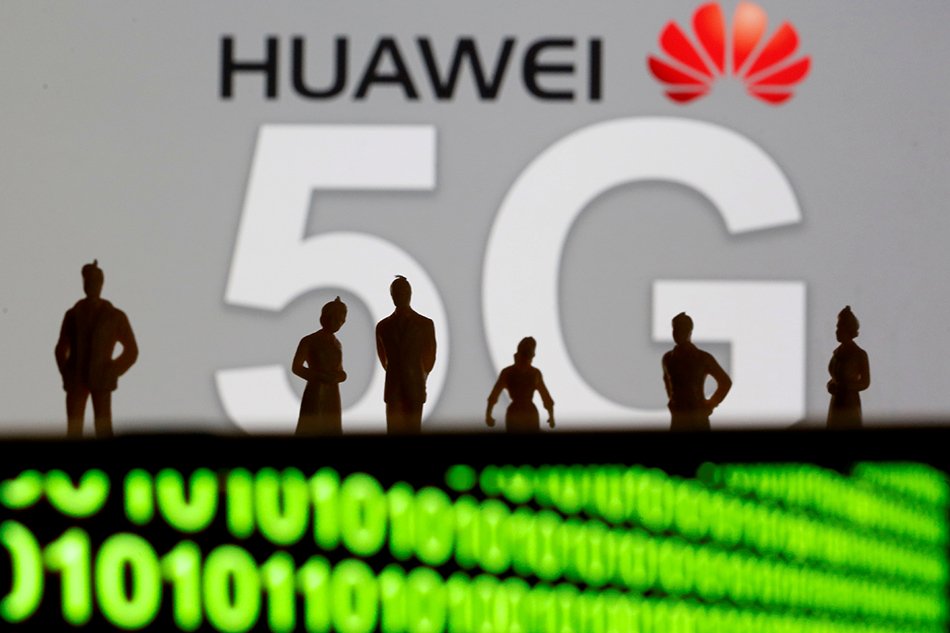
5G, Huawei, blockchain: Trends shaping technology in 2020


LONDON -- In 2020, will the wow factor return to consumer hardware? Will blockchain and 5G punch into the mainstream? Or will the world unify against Big Tech's tax-avoiding practices? 

AFP looks at 5 themes shaping the world of technology, after a year in which debate intensified over the industry's exploitation of its customers' privacy.

5G'S UNFULFILLED PROMISE

Super-fast fifth-generation network speeds are meant to revolutionize communications along with areas like urban transport.

But so far, 5G has failed to meet expectations due to the lagging build of infrastructure in many places. Apple has yet to launch a compatible phone, unlike rivals including Samsung.

The rollout should quicken next year as more countries install base stations and networking equipment -- although US President Donald Trump's war on Chinese sector leader Huawei remains a wild card.

As smartphone sales plateau around the world, manufacturers have been focusing more on ancillary services.

"You have to sell the entire experience, the entire ecosystem," Dominique Bindels, senior analyst for home and tech with London-based research firm Euromonitor International, told AFP.

Highlighting Apple's success in payments and peripheral devices such as AirPods, Bindels predicted that smart earphones, along with speakers and at-home devices connected on the "internet of things", would be among the more dynamic sectors in 2020.

Digital assistants such as Alexa and Siri may start talking to each other, after Amazon, Apple and Google this month formed an alliance with other industry players to develop a common standard for smart home devices.

Another trend could be consolidation in TV streaming, after Apple and Disney joined Netflix, Amazon Video and some national broadcasters in a crowded subscription market.

LEAP INTO THE QUANTUM DARK

For the industry at large, business consultancy Accenture this year coined the acronym DARQ to denote 4 major trends: distributed ledger technology (such as blockchain), artificial intelligence (AI), extended reality and quantum computing.

Unbreakable blockchain networks of computers have already been generating virtual currencies in the form of bitcoin and its ilk, bypassing the need for a regulator like a government or central bank. 

Facebook wants to make the tech respectable through its "Libra" project, but has hit political opposition around the world, and several financial partners have pulled out.

Unwilling to let private enterprise dictate terms, China and other nations are building their own digital payments systems, which could see fruition next year.

However, blockchain networks devour huge amounts of energy, and concerns will mount about their environmental impact as debate intensifies more broadly about tech's contribution to climate change.

THE PRICE OF PRIVACY

Most companies are now actively engaged across the spectrum of another tech acronym, SMAC: social, mobile, analytics and cloud. For consumers, SMAC is felt in how we communicate with friends and how we search and shop.

That is accentuating fears about privacy, after a series of data leaks at Facebook first laid bare how much of our online lives are exploited by companies and political parties.

"People are becoming more conscious of sharing data but also in the same moment, the Nest cameras and smart speakers are flying off the shelves," said Bindels.

"There's a huge divide. People have been learning to trade privacy for convenience. It's just another currency."

Amnesty International, in a hard-hitting study last month into Facebook and Google, said that trade-off amounts to a "Faustian bargain" which imperils our human rights.

TECH WARS

To Beijing's anger, Washington alleges that Huawei and another telecoms group, ZTE, are little more than shell fronts for Chinese spy chiefs.

Ni Lexiong, professor at the Shanghai National Defense Strategy Institute, said US sanctions depriving those firms of access to US components would only encourage China to stand on its own feet.

"In the end, once China has formed its own industrial chain in the field of artificial intelligence, the United States will also lose a large market," he said.

Samm Sacks, an expert on China's digital economy at the Washington think tank New America, said the tech standoff could harm progress in areas such as precision medicine and AI-based diagnoses.

The two countries have cooperated in research, "and severing that could have global consequences", she warned.

TAXING TIMES

The US presidential election next November will likely prove another flashpoint over disinformation peddled on social media. 

Democratic hopeful Elizabeth Warren wants Amazon, Facebook and Google to be broken up on anti-trust grounds.

The Organisation for Economic Cooperation and Development is meanwhile due by June 2020 to present a "unified approach" for richer countries to levy a digital tax on internet giants.

Some like France have gone ahead with their own tax, igniting another front in Trump's multifaceted trade wars as the US threatens tariffs on a range of French goods.

Agence France-Presse

Wednesday, November 20, 2019

Singapore proposes to regulate bitcoin futures


HONG KONG - Singapore's central bank plans to bring bitcoin and other similar cryptocurrency futures traded on approved exchanges under its regulation in response to interest from international institutional investors, it said on Wednesday.

Market watchdogs worldwide have been debating whether and how they should regulate the cryptocurrency industry. Many have focused their attention initially on investor protection issues given concerns about market manipulation and cryptocurrencies' volatility.

In a consultation document, the Monetary Authority of Singapore (MAS) said that it had seen interest from institutional investors in trading "payment tokens" like bitcoin and ether, who "have a need for a regulated product to gain and hedge their exposure to the payment tokens."

The consultation will close on Dec. 20.

Derivatives products are a particular concern for regulators looking to protect investors, and MAS said that it did not consider bitcoin and other similar derivatives to be suitable for trading by retail investors.

"The underlying payment tokens tend to exhibit high volatility and are intrinsically difficult to value. ... Losses also amplified due to the leveraged nature of derivatives, and investors may even lose more than the whole amount they had put in," MAS said.

Some U.S.-based exchanges including the Chicago Mercantile Exchange and ICE Futures US, already allow trading of bitcoin futures.

However, Hong Kong's Securities and Futures Commission said earlier this month that exchanges allowing trading of bitcoin futures "may well be conducting an illegal activity."

MAS only proposes to regulate futures traded on exchanges it already regulates. It warned investors it did not regulate token derivatives not traded on approved exchanges.

"The inclusion of these products in the approved exchanges will certainly provide new opportunities for all regulated exchanges. This may create liquidity for these products," David Gerald, president of the Securities Investors Association (Singapore), said in a statement, but warned retail investors of the high risk involved in investing in these products. (Reporting by Alun John and Anshuman Daga; Editing by Susan Fenton)

source: news.abs-cbn.com

Wednesday, October 30, 2019

China seen advancing in race for blockchain supremacy


LONDON - Calls by China's president to put blockchain at the heart of the country's innovation could tip the scales towards Beijing in the global race to lead in the fledgling technology, analysts and investors said.

Xi Jinping said last week that China should accelerate the development of blockchain, in remarks that marked the first time Beijing has thrown its weight behind the widely hyped - but still unproven - technology.

Reinforcing the public embrace of blockchain, a Chinese central bank official said on Monday commercial banks should step up their application of the technology to embrace digital finance.

The backing came at a key moment in the evolution of the technology. Blockchain, originally conceived as the base for the cryptocurrency bitcoin, is a shared ledger that can be used to record and share information in real time.

No blockchain project has yet found widespread commercial usage. Any China-led system that gains traction could push the country to the forefront, leading figures in the technology said.

That would have profound implications for applications from finance and payments to commerce, they said.

"If China wins the race to have the world's largest business blockchains actually transacting real-world financial activity, it will be the first-mover and thereby build in all the default features into the platform," said Lex Sokolin, global financial-technology co-head at U.S. blockchain developer and investor ConsenSys.

In the West, banks, tech companies and retailers - attracted by promises of lower costs - have poured billions of dollars into testing blockchain. But few projects have proceeded or gained wide application, a Reuters analysis earlier this year found.

A number of competing protocols, from the original bitcoin blockchain to other open-source platforms, are jostling for adoption. None has gained predominance.

Many industry figures expect a blockchain project that's widely used will become a standard for the field. Beijing's support could see a Chinese blockchain project achieve that, said Garrick Hileman, head of research at crypto firm Blockchain and author of a University of Cambridge study on the tech.

"The significance of the Xi announcement should not be underestimated at all," Hileman said. "You could see a Chinese-led, and more tightly controlled, platform emerge that's certainly different to some of the open networks that have dominated the space, like bitcoin."

INVESTMENT BOOST?

Beijing's support may also lead to greater investment in related companies, potentially hastening the mainstream application and use of the technology, industry figures said.

"I do expect to see multi-billion dollar support for core Chinese tech companies," said ConsenSys's Sokolin, adding that any forced implementation of the tech in finance and commerce sectors would be a key Chinese advantage.

Bets on blockchain and cryptocurrency-related companies in the West have far outpaced China this year after lagging in 2018, data from research firm PitchBook shows. U.S. investment alone reached $1.1 billion in 2019, compared with $47 million in China. In 2018, though, Chinese firms attracted bets worth $3 billion, compared with$2.6 billion in the United States.

For an interactive graphic, click here https://tmsnrt.rs/2q3Elxs.

While blockchain investment in the West has grown, a PricewaterhouseCoopers survey last year found that uncertainty over regulation has dampened the commercial adoption of blockchain.

Xi's backing, a rare example of the leader of a major economy supporting blockchain, contrasts with the equivocal support from other countries, said Windsor Holden, an independent telecoms and payments consultant who tracks blockchain.

"Most governments in the West have been far more cautious," he said. "The sheer fact that there is so much support for the project in China clearly puts any initiatives or standards that emerge on the front foot."

(Reporting by Tom Wilson, editing by Larry King)

source: news.abs-cbn.com

Monday, October 28, 2019

Bitcoin holds ground after China voices support for blockchain


LONDON - Bitcoin held ground on Monday near a one-month high scaled over the weekend after China's President Xi Jinping said the world's second biggest economy should accelerate the development of blockchain technology.

Blockchain, a digital ledger that forms the backbone of many cryptocurrencies such as bitcoin, should be the core for innovation in China, Xi said on Thursday.

Bitcoin surged 24% between Friday and Saturday after Xi's comments, touching $10,350 in its biggest two-day jump since the height of its retail-driven bubble in December 2017. Other major cryptocurrencies including ethereum and Ripple's XRP also soared.

In early London trading, bitcoin - the largest cryptocurrency by market capitalization - was down 1.6% at $9,403.

Cryptocurrency exchanges are banned in China, though trading is popular on over-the-counter venues, and Chinese buyers account for major volumes on platforms elsewhere, market players say.

"The positive comments from the Chinese leader will continue to support the broader crypto prices to maintain at current levels, as China remains a major player when it comes to global crypto trading," said Andy Cheung, head of operations of OKEx, a Malta-based exchange popular among Chinese, in an email.

China-based Google searches for bitcoin and blockchain also spiked after Xi's comments, suggesting that the remarks had piqued intense interest in cryptocurrencies.

"There have definitely been more conversations since the weekend," said Anthony Wong of Hong Kong-based crypto investment firm Orichal Partners.

Bitcoin has slumped in recent months as politicians and regulators across the world have criticized Facebook's planned Libra cryptocurrency. It had lost a third since it touched its highest this year in June on hopes that Libra would hasten the mainstream acceptance of virtual coins. (Reporting by Tom Wilson; Editing by Alison Williams)

source: news.abs-cbn.com

Thursday, August 15, 2019

Trade tensions and a weaker yuan drive Chinese crypto demand, market players say


LONDON/NEW YORK - Trade tensions between the United States and China and a weakening yuan are boosting demand for cryptocurrencies among Chinese investors, market players from Asia to New York said.

Exchanges, researchers and brokers told Reuters they have seen an uptick in activity at crypto trading venues popular with Chinese. They said over-the-counter (OTC) brokers, which act as middlemen for buyers and sellers, have seen much of the activity.

Measuring crypto trading volume in China or elsewhere is highly difficult.

While digital wallets used to send and receive coins can be tracked on the blockchain technology that underpins most coins, the geographical location of senders cannot. And the Chinese government's 2017 ban on crypto platforms means there is little data on the sector in the country.

Still, the impact of the US-Sino trade war on China's economy and its falling currency are driving some larger investors to shift money from the yuan to cryptocurrencies, said Andy Chung, head of operations at OKEx, a Malta-based platform popular among Chinese.

China's economy has been hit by simmering trade tensions between Washington and Beijing. Data on Wednesday showed the slowest growth for Chinese industrial output in 17 years, suggesting tariffs are impacting demand in the world's second-largest economy.

And last week, China allowed the yuan to break through the key 7-per-dollar level for the first time since 2008, prompting Washington to label Beijing a currency manipulator and upsetting markets.

The yuan's sharp fall on Aug. 5 coincided with a 7 percent gain for bitcoin and a 9 percent surge in cryptocurrencies' market capitalization, leading analysts to speculate that some Chinese investors were selling the yuan and buying digital currencies.

"People worry about not just the yuan but the overall economy in China. We see a lot of internet companies freezing hiring, and they are actually laying off people already because of the trade war," said Chung, who is based in Hong Kong.

China maintains heavy capital controls, leaving few options for Chinese people seeking to move money offshore. That means cryptocurrencies are, in theory, an attractive vehicle for moving assets out of China.

Indeed, there has been a correlation between a weaker yuan and stronger bitcoin during times of lower volatility in crypto markets this year.

Mati Greenspan, an analyst at the eToro exchange, said as the US dollar surpassed 7 yuan the venue saw significant increases in crypto and commodities trading, alongside a moderate drop-off in stocks and fiat currency volumes.

"Crypto assets saw a particularly pronounced spike on the day of the People's Bank of China's (yuan) decision: Volumes across all cryptos on eToro's trading platform doubled from their levels a week prior, both globally and in China and Hong Kong," he added.

Still, Greenspan could not say whether crypto buying came from Chinese investors.

ARBITRAGE CHANCES

Chinese investors have stayed active in cryptocurrencies despite the prohibition of exchanges. Most Chinese crypto trading has shifted to OTC venues, as well as WeChat groups since the ban, market participants said.

"We just know that there is a lot of activity, and for regulatory reasons it's under the radar a bit," said Garrick Hileman, head of research at digital wallet firm Blockchain.

Local OTC desks were seeing an increase of more than two times in Chinese trading volume over the past three months as trade jitters percolated, said Jehan Chu, managing partner at Hong Kong-based crypto fund Kenetic.

For individual investors, the motivation to trade crypto is also down to chances to make money via arbitrage between the yuan, the Hong Kong dollar, and Tether - a so-called stablecoin backed by US dollars, market players said.

Digital currency research firm Diar said in a recent report Tether flows into exchanges catering primarily to Chinese traders totalled $10 billion in the year to June, it said. Last year's transactions were worth $18 billion.

"A lot of people trying to move capital in and out of borders try to use Tether as a medium," said Anthony Wong of Hong Kong-based crypto investment firm Orichal Partners.

(Reporting by Tom Wilson and Gertrude Chavez-Dreyfuss; Editing by Toby Chopra) 

source: news.abs-cbn.com

Monday, July 15, 2019

Bitcoin drops more than 10 percent as scrutiny of cryptocurrencies grows


LONDON - Bitcoin slumped more than 10 percent over the weekend to a two-week low as fears of a crackdown of cryptocurrencies grew on mounting scrutiny of Facebook's planned Libra digital coin.

Bitcoin fell 11.1 percent from Friday to $9,855 early on Monday, its lowest since July 2. The original cryptocurrency slumped 10.4 percent on Sunday alone, its second-biggest daily drop this year. It was last up 0.5 percent at $10,245.

Politicians and financial regulators across the world have called for scrutiny of Facebook's Libra coin, with concerns ranging from consumer protection and privacy to its potential systemic risks given the social media giant's global reach.

US President Donald Trump criticized bitcoin, Libra and other cryptocurrencies last week, demanding that firms seek a banking charter and subject themselves to US and global regulations if they wanted to "become a bank".

Bitcoin, which initially shrugged off Trump's tweet, fell sharply after US Federal Reserve Chairman Jerome Powell called for a halt to Facebook's project until concerns from privacy to money-laundering were addressed.

"Together they have increased the tail risk that the US will look to crack down on it in some way," said Jamie Farquhar, portfolio manager at crypto firm NKB Group in London.

Underscoring the growing attention on Facebook's plans, Japanese authorities have also set up a working group to look at Libra's possible impact on monetary policy and financial regulation, government sources told Reuters.

European Central Bank policymaker Benoit Coeure is due to deliver a preliminary report on the matter at a meeting of G7 finance ministers this week in Chantilly, north of Paris.

Bitcoin climbed nearly 55 percent in nine days after Facebook unveiled its plans for Libra on June 18, touching an 18-month high of nearly $14,000. The project has boosted hopes among some investors that cryptocurrencies could gain wider acceptance.

(Reporting by Tom Wilson Editing by Andrew Heavens)

source: news.abs-cbn.com

Sunday, July 14, 2019

Facebook's Libra currency under fire


LONDON - Facebook's planned virtual unit Libra, already under heavy attack from US President Donald Trump and global regulators, faces skepticism among the wider cryptocurrency community as well.

One theme -- besides Brexit -- dominated discussion among the movers and shakers from London's financial technology or FinTech industry as gathered for their annual get-together: the future of virtual currencies.

"Can I just ask you to raise your hand if you would not be willing to use Libra?" asked the moderator at an event at London's recent 'FinTech Week'.

In the room, filled with about 100 experts and media who closely track the sector, about two-thirds of participants raised their hand to express distrust at the upstart currency.

Helen Disney, founder and boss of Unblocked Events, which promotes the blockchain technology that powers many cryptocurrencies, acknowledged growing doubts over who exactly would oversee and regulate Libra's operation.

POWER TO THE PEOPLE

People are "concerned about how the governance... would work", Disney told AFP.

"The cryptocurrency community is very libertarian in thinking," its "about giving power to the people, democratization of finance, keeping away from big banks and companies who control (the) economy," she said

Last week's gathering came one month after Facebook announced to the world its plans for the virtual currency.

Libra, which is widely regarded as a challenger to dominant global player Bitcoin, is expected to launch in the first half of 2020.

Whereas Bitcoin is decentralized, Libra will be co-managed by 100 partner firms, including Facebook's newly-minted financial services division Calibra.

The companies behind Libra -- which will be backed with a basket of real-world currencies -- include payment giants Visa, MasterCard and PayPal, as well as taxi-hailing services Lyft and Uber.

To access Libra on smartphones, users will go through a virtual wallet that will also be named Calibra.

While Facebook boasts an enormous customer base dotted across the globe that should facilitate Libra's uptake, it has also been plagued by privacy concerns that could make users hesitate.

"Can't wait for a cryptocurrency with the ethics of Uber, the censorship resistance of Paypal, and the centralization of Visa, all tied together under the proven privacy of Facebook," said Sarah Jamie Lewis, head of non-profit research organization Open Privacy.

Libra has meanwhile raised eyebrows among the world's financial regulators, including the Bank of England, the European Central Bank and the US Federal Reserve.

But Disney believes that Libra will finally force regulators to present clear regulation guidelines, as demanded by the cryptocurrency community itself.

"We have been waiting for a long time for a clearer signal (regarding) the regulation of cryptocurrencies and digital assets," she said.

But James Bennett, head of cryptocurrency research firm Bitassist, argues that Libra should not be seen in the same light as Bitcoin.

"In the long run, people may realize that Libra is not a cryptocurrency," Bennett said at the FinTech Week event.

"A true cryptocurrency should be resistant to attacks by all parties, from sovereign states to global corporations," he said, adding that "cryptocurrency is a type of money used to transfer value over the internet that cannot be stopped, confiscated or destroyed by any single entity".

BASED ON THIN AIR 

Trump has meanwhile unleashed a vicious attack on virtual currencies, slamming them for their alleged shadowy nature and arguing that Libra had no standing nor dependability -- unlike the dollar.

"I am not a fan of Bitcoin and other cryptocurrencies, which are not money, and whose value is highly volatile and based on thin air," Trump tweeted Thursday.

source: news.abs-cbn.com

Tuesday, July 2, 2019

Bitcoin's losses grow, recoils 30 percent from 2019 highs


LONDON - Bitcoin skidded as much as 9 percent on Tuesday, falling below the $10,000 mark and pushing losses to over 30 percent since the original cryptocurrency hit an 18-month-high last week.

In volatile trading, bitcoin recovered some of that ground by early afternoon to trade down 6 percent at $9,953.

On Wednesday last week, it touched $13,880, its highest since January 2018, on hopes that Facebook's unveiling of its Libra cryptocurrency would drive adoption of digital coins.

Traders said there was no immediate news catalyst for the fall, ascribing the moves to largely technical trading. Other major cryptocurrencies including Etherum and Ripple's XRP also fell 4 percent and 5.5 percent respectively.

Facebook's announcement that it planned to launch by the end of June 2020 its own digital coin as part of a push into digital payments and e-commerce signalled a resurgence in interest in digital currencies, traders said.

After a relatively quiet few days, daily volatility in bitcoin has exploded since last week. 

(Reporting by Tom Wilson; Editing by Saikat Chatterjee)

source: news.abs-cbn.com

Monday, June 24, 2019

Bitcoin surges above $11,000 thanks to Facebook's currency plans


LONDON - Bitcoin surged to a near 16-month high above $11,000 Monday, overshadowing showings across stock, foreign exchange and commodity markets, with investors looking ahead to the week's G20 summit.

Bitcoin reached $11,251.21, surpassing $10,000 for the first time since March last year, as the cryptocurrency sector got a huge boost from Facebook's unveiling of its own digital unit Libra, analysts said. 

"The strong resurgence in the bitcoin price is mainly due to the renewed mainstreaming interest in cryptocurrencies and the technology which underlines them," Naeem Aslam, analyst at trading group ThinkMarkets, said.

"Projects like Facebook's Libra have provided much-needed tailwind for this space."

The social network plans to launch Libra next year, with the backing by a basket of real-world currencies and a consortium of companies including Visa, MasterCard, PayPal and Uber.

"Bitcoin volatility is likely to persist, with $12,000 and $15,000 as the next two critical resistance levels," said OANDA senior market analyst Edward Moya.

Bitcoin has risen about 20 percent this month alone but is still well off record levels near $20,000 seen at the end of 2017.

Elsewhere Monday, oil prices nudged higher as rising US-Iran tensions continued to fuel supply concerns.

Stock markets were largely steady ahead of a crunch meeting between US President Donald Trump and Chinese counterpart Xi Jinping at the weekend summit of 20 major economies.

Markets are waiting to see if Trump and Xi can break an impasse in their trade war when they meet on the sidelines of the event in Japan.

Global equities last week rallied after Trump hailed positive telephone talks between the pair, fuelling hopes of a possible end to their long-running tariffs battle.

"No one thinks the US and China will do a deal in Osaka, but there is some hope that we will have a positive development that marks a shift in the rhetoric and a re-energizing of talks following the breakdown in the recent discussions," said Neil Wilson, chief market analyst at Markets.com.

The dollar meanwhile dropped Monday, continuing to face pressure from expectations that the Federal Reserve could lower US interest rates as soon as July as the economy shows signs of softening amid the trade war with China.

source: news.abs-cbn.com

Tuesday, June 18, 2019

Facebook reveals Libra cryptocurrency, with lofty goals


SAN FRANCISCO/NEW YORK - Facebook Inc revealed plans on Tuesday to launch a cryptocurrency called Libra, the latest development in its effort to expand beyond social networking and move into e-commerce and global payments.

Facebook has linked with 28 partners in a Geneva-based entity called the Libra Association, which will govern its new digital coin set to launch in the first half of 2020, according to marketing materials and interviews with executives.

Facebook has also created a subsidiary called Calibra, which will offer digital wallets to save, send and spend Libras. Calibra will be connected to Facebook's messaging platforms Messenger and WhatsApp, which already boast more than a billion users.

The Menlo Park, California-based company has big aspirations for Libra, but consumer privacy concerns or regulatory barriers may present significant hurdles.

Facebook hopes it will not only power transactions between established consumers and businesses around the globe, but offer unbanked consumers access to financial services for the first time.

The name "Libra" was inspired by Roman weight measurements, the astrological sign for justice and the French word for freedom, said David Marcus, a former PayPal executive who heads the project for Facebook.

"Freedom, justice and money, which is exactly what we're trying to do here," he said.

Facebook also appears to be betting it can squeeze revenue out of its messaging services through transactions and payments, something that is already happening on Chinese social apps like WeChat.

The Libra announcement comes as Facebook is grappling with public backlash due to a series of scandals, and may face opposition from privacy advocates, consumer groups, regulators and lawmakers.

Some Facebook adversaries have called for the company to incur penalties, or be forcibly broken up, for mishandling user data, allowing troubling material to appear on its site and not preventing Russian interference in the 2016 presidential election through a social media disinformation campaign.

It is not clear how lawmakers or regulators will react to Facebook making a push into financial services through the largely unregulated world of cryptocurrency.

In recent years, cryptocurrency investors have lost hundreds of millions of dollars through hacks, and the market has been plagued by accusations of money-laundering, illegal drug sales and terrorist financing.

Facebook has engaged with regulators in the United States and abroad about the planned cryptocurrency, company executives said. They would not specify which regulators or whether the company has applied for financial licenses anywhere.

Facebook hopes it can bring global regulators to the table by publicizing Libra, said Kevin Weil, who runs product for the initiative.

"It gives us a basis to go and have productive conversations with regulators around the world," said Weil. "We're eager to do that."

MAJOR PARTNERS

Bitcoin, the most well-known cryptocurrency, was created in 2008 as a way for pseudonymous users to transfer value online through encrypted digital ledgers. Early developers believed that the world needed an alternative to traditional currencies, which are controlled by governments and by central banks.

Since then, thousands of bitcoin alternatives have launched, and Facebook is just one of dozens of blue-chip companies dabbling with the underlying technology. But its status as a Silicon Valley behemoth that touches billions of people around the world has created significant buzz around Libra's potential.

Partners in the project include household names like Mastercard Inc, Visa Inc, Spotify Technology SA , PayPal Holdings Inc, eBay Inc, Uber Technologies Inc and Vodafone Group Plc, as well as venture capital firms like Andreessen Horowitz.

They hope to have 100 members by Libra's launch during the first half of 2020. Each member gets one vote on substantial decisions regarding the cryptocurrency network and firms must invest at least $10 million to join. Facebook does not plan to maintain a leadership role after 2019.

Though there are no banks among the inaugural members, there have been discussions with a number of lenders about joining, said Jorn Lambert, executive vice president for digital solutions at Mastercard. They are waiting to see how regulators and consumers respond to the project before deciding whether to join, he said.

The Libra Association plans to raise money through a private placement in the coming months, according to a statement from the association.

PRIVACY, REGULATORY CONCERNS

Although Libra-backers who spoke to Reuters or provided materials are hopeful about its prospects, some expressed awareness that consumer privacy concerns or regulatory barriers may prevent the project from succeeding.

Calibra will conduct compliance checks on customers who want to use Libra, using verification and anti-fraud processes that are common among banks, Facebook said.

The subsidiary will only share customer data with Facebook or external parties if it has consent, or in "limited cases" where it is necessary, Facebook said. That could include for law enforcement, public safety or general system functionality.

Transactions will cost individuals less than merchants, Facebook said, though executives declined to provide specifics. Each Libra will be backed by a basket of government-backed assets.

The company plans to refund customers who lose money because of fraud, Facebook said.

Sri Shivananda, Paypal's chief technology officer said in an interview that the project is still in its "very, very early days," and there were conversations in progress with regulators.

Mastercard's Lambert characterized Libra similarly, noting much needed to happen before the launch.

If the project receives too much regulatory pushback, he said, "we might not launch."

(Reporting by Katie Paul and Anna Irrera Editing by Lauren Tara LaCapra and Lisa Shumaker)

source: news.abs-cbn.com

Tuesday, April 16, 2019

France sees blockchain as anti-monopoly weapon in digital world


PARIS -- France is pushing blockchain technology as a means of preventing finance giants enjoying a monopoly on transactions, Finance Minister Bruno Le Maire said Monday.

"Blockchain protocols are a game changer," Le Maire said at "Paris Blockchain week," a flagship symposium attended by experts in the technology which originally came to prominence as the digital infrastructure for cryptocurrency bitcoin.

"Thanks to blockchain protocols users have the possibility of creating and running their own networks for money transfers, trade and services without intermediation from any platform" he said.

France had already put in place legal, fiscal and accounting structures to manage fundraising in digital currencies as a pillar of the blockchain economy, he said.

Le Maire said he would ask France's EU partners to consider "a French-inspired single (European) regulatory framework (governing) crypto assets".

Paris earlier this year drew up a roadmap to regulate and implement investment in the blockchain ecosystem with a view to becoming a global leader in the technology.

Supporters say the technology creates a comprehensive ledger of transactions which cannot be falsified.

They say the technology could revolutionize the global economy by allowing, for example, financial transactions which bypass financial intermediaries and even the use of 'fiat' money.

A recent slump in the market value of cryptocurrencies, not least standard-bearer bitcoin, after 2017's meteoric rise has doused enthusiasm.

But the expanding rollout of blockchain has seen it largely ride out the storm.

The chairman of France's financial markets' regulator (AMF), Robert Ophele, meanwhile told the conference Paris will shortly allow fundraising for digital currency offerings after drawing up a legal framework for coin offerings, a means for firms to raise money by offering digital coins or tokens to the public. 

"We think we shall be ready in September to receive the first dossiers and deliver the first permits," Ophele said, adding he is open to the placing of financial assets on the blockchain to facilitate their exchange.

Blockchain "is quicker," "costs much less," and has a global footprint," Ophele said.

One sector which could benefit from the speeding up of transactions is the transfer of real estate title, he said.

"If it is well done ... it could go through quicker than the transitional two or three days" from market transaction to actual transfer of title.

source: news.abs-cbn.com

Wednesday, October 31, 2018

Birthday blues for bitcoin as investors face year-on-year loss


LONDON - Bitcoin was heading towards a year-on-year loss on Wednesday, its 10th birthday, the first loss since last year's bull market, when the original and biggest digital coin muscled its way to worldwide attention with months of frenzied buying.

By 1300 GMT, bitcoin was trading at $6,263 on the BitStamp exchange, leaving investors who had bought it on Halloween 2017 facing yearly losses of nearly 3 percent.

A year ago, bitcoin closed at $6,443.22 as it tore towards a record high of near $20,000, hit in December.

That run, fueled by frenzied buying by retail investors from South Korea to the United States, pushed bitcoin to calendar-year gains of over 1,300 percent.

Ten years ago, Satoshi Nakamoto, bitcoin's still-unidentified founder, released a white paper detailing the need for an online currency that could be used for payments without the involvement of a third party, such as a bank.

Traders and market participants said the Halloween milestone was inevitable, given losses of around 70 percent from bitcoin's peak and the continuing but incomplete shift towards investment by mainstream financial firms.

"The value mechanisms of crypto and bitcoin today are based more on underlying tech than hype and FOMO (fear of missing out)," said Josh Bramley, head trader at crypto wealth management firm Blockstars.

Growing use of blockchain - the distributed ledger technology that underpins bitcoin - is now powering valuations of the digital currency, he said, cautioning that some expectations for widespread use have not yet materialized.

Others said improvements to infrastructure such as custody services may allow mainstream investors who are wary of buying bitcoin to take positions.

"We see behind closed doors financial and non-financial institutions beavering away to create the infrastructure," said Ben Sebley, head of brokerage at NKB Group, a blockchain advisory and investment firm.

Bitcoin has endured year-on-year losses before, according to data from CryptoCompare, most recently in 2015-15.

Retail investors still account for a strong proportion of trading, market players said.

Investors who bet early on bitcoin and have stuck with it have faced a roller-coaster ride in its first decade. Many told Reuters they are optimistic that they are still onto a winner.

(Reporting by Tom Wilson)

source: news.abs-cbn.com

Monday, August 27, 2018

Chinese bitcoin mining rig makers aim for billions in HK IPOs - sources


HONG KONG - Three of the world's largest bitcoin mining equipment makers plan to raise billions of dollars with initial public offerings in Hong Kong, even as other companies report plunging demand for the chips needed to make bitcoin and a halving in the price of the cryptocurrency.

Soaring cryptocurrency prices last year triggered a boom in demand for specialist mining chips and in developing "mines" - facilities with thousands of machines that create the coins by solving complex mathematical puzzles.

Yet the U.S. chipmaker Nvidia Corp said this month that second-quarter sales to crypto miners totaled just $18 million, compared with $100 million expected by analysts.

Nvidia's chief financial officer, Colette Kress, said she anticipated "no contribution" to revenues from cryptocurrency in coming months.

That has raised concerns about the upcoming Hong Kong listings by three Chinese manufacturers of bitcoin mining equipment, Bitmain, Canaan Inc and Ebang International Holdings.

The companies all design high-end computer chips intended for mining cryptocurrencies, particularly bitcoin, and sell mining equipment containing the chips. In addition, Bitmain mines cryptocurrencies on its own account. Companies like Nvidia also sell specialty chips used for mining.

"The marked decline in the price of bitcoin since the start of the year is likely to weigh on investors' interest in these companies," said Benjamin Quinlan, chief executive of financial services consultancy Quinlan & Associates.

But, he added, "the fall in the price of bitcoin from its peaks has not been matched by an equivalent fall in the numbers of people mining it."

Bitcoin is currently trading at $6,699, down 64 percent from its December 2017 peak of $18,690. Daily mining revenue was 77 percent lower than in December, according to Blockchain.info, a data analytics and wallet provider.

"As the bitcoin price decreases, so does the profitability of mining itself, which decreases demand for mining chips and miners," said Wang Leilei, a consultant at financial services consultancy Kapronssia.

It is not just the price of bitcoin that is causing worries. People close to the IPOs said regulatory scrutiny and a patchy performance by Hong Kong offerings this year were additional concerns.

Julian Hosp, president of TenX, a Singapore-based blockchain firm, has also warned that if coins switch mining algorithms, then the machines designed to mine them would become useless.

"I would be quite wary of investing in these miners," Hosp said, referring to the equipment makers. "They are not long-term businesses and I think they've had their uptrend for now."

READYING IPO SALES PITCHES

Canaan and Ebang filed plans in May and June respectively for floats in Hong Kong, while Bitmain is expected to file its plans next month for an IPO in which it aims to raise at least $3 billion, sources close to the deal said.

Cryptocurrency trading is a global activity, but Chinese chipmakers have led the way in developing the most efficient means to mine the coins.

Bitmain had three quarters of the market for the specialist chips last year, followed by Canaan on 14 percent, according to estimates by analysts at Bernstein.

Ebang is aiming to raise up to $1 billion, according to sources, while Canaan is targeting at least $400 million - down from a figure of up to $2 billion touted earlier this year by people involved in the deal.

While EBang is expected to face Hong Kong's listing committee in September - a key approval needed for marketing the IPO - Canaan's offering is taking longer.

Two sources familiar with Canaan's situation said the company had not yet fixed a date for a committee appearance, as it worked on clearing up questions from HKEX officials regarding due diligence done on its prospectus.

A source close to Bitmain'S IPO said the company was aware about the potential for close regulatory scrutiny.

Bitmain, Canaan and Ebang didn't respond to requests for comment. A Hong Kong exchange spokesman declined to comment.

The bitcoin price slump is leading miners to consider their IPO sales pitches carefully, with many involved expecting them to push the potential of other uses for their chips.

Both Canaan and Ebang highlight the potential for their technology to be applied to other cutting-edge sectors.

That includes broader development of blockchain applications - the ledger system that underpins bitcoin and which is being widely explored by the financial industry - as well as artificial intelligence tools and the forthcoming build-out of 5G telecoms networks both within and outside China.

"The mainland government encourages chip design and production, as that is a segment of China's market that has been suffering," said Kapronssia's Wang.

"Bitmain and Canaan chips could also be used for non-bitcoin applications, like blockchain in general, big data, cybersecurity or AI, which is an advantage for the companies." 

source: news.abs-cbn.com