Showing posts with label Big Tech. Show all posts

Tuesday, December 21, 2021

Wall Street bounces from Omicron selloff as Nike, Micron lead gains

Wall Street's main indexes rose more than 1 percent on Tuesday, boosted by Nike and Micron following strong earnings, while beaten-down big technology stocks bounced back from an Omicron-driven rout in the previous session.

The rapidly spreading variant of the coronavirus has rattled stock markets around the world, triggering major sell-offs in the final month of the year due to worries about the strain's impact on a global economic recovery.

Nike Inc rose 6.6 percent, boosting the Dow Jones Industrial Average. It beat quarterly estimates for profit and revenue, and sounded confident of a letup in supply chain problems in its next fiscal year.

Micron Technology Inc, up 9.5 percent, led the advance among chipmakers after it forecast upbeat second-quarter earnings and topped Wall Street expectations for quarterly profit and revenue.

The two companies positive updates helped allay some concerns about broader supply chain constraints in a high inflation environment, which has become a cause for concern for central banks globally.

Ten of the 11 major S&P 500 sectors rose in early trading, while the Philadelphia SE Semiconductor index gained 1.7 percent.

"We got oversold yesterday and we are bouncing back a little bit today," said Dennis Dick, a proprietary trader at Bright Trading LLC in Las Vegas.

"This market is more of a dead cat bounce as opposed to this new bull market that is going to rage into 2022. There are just too many concerns."

Mega-cap growth firms, including Tesla Inc, Microsoft Corp, Apple Inc, Amazon.com Inc , Meta Platforms and Alphabet Inc rose between 0.4 percent and 1.7 percent after taking a beating on Monday.

Investors have taken a more defensive stance this month, with sectors such as consumer staples, real estate and utilities among top gainers.

Most of the defensive plays made little gains on Tuesday.

"It's good to see green going into the next year but if you just take a step back and look at the broader picture you're seeing financial conditions change," said Joshua Chastant, senior investment analyst at GuideStone Capital Management.

"Our base case is that next year is going to have a lot of volatility around it, and it's definitely not going to be business as usual in the markets."

At 12:00 p.m. ET, the Dow Jones Industrial Average was up 461.08 points, or 1.32 percent, at 35,393.24, the S&P 500 was up 49.49 points, or 1.08 percent, at 4,617.51 and the Nasdaq Composite was up 187.12 points, or 1.25 percent, at 15,168.07.

Travel-related stocks, which fell in the previous session on the prospect of tighter curbs, rose on Tuesday. The S&P 1500 Airlines index jumped 5.8 percent and was set for its best day since early December.

General Mills Inc fell 4.2 percent after missing analysts' estimates for quarterly profit.

Advancing issues outnumbered decliners by a 4.46-to-1 ratio on the NYSE and by a 2.96-to-1 ratio on the Nasdaq.

The S&P index recorded nine new 52-week highs and no new low, while the Nasdaq recorded 20 new highs and 67 new lows. (Reporting by Shreyashi Sanyal and Bansari Mayur Kamdar in Bengaluru; Editing by Anil D'Silva, Uttaresh.V and Maju Samuel)

-reuters-

Monday, August 16, 2021

Big Tech rolls on as investors shrug off regulatory pressure

WASHINGTON - Pressure is rising on Big Tech firms, signaling tougher regulation in Washington and elsewhere that could lead to the breakup of the largest platforms. But you'd hardly know by looking at their share prices.

Shares in Apple, Facebook, Amazon and Google parent Alphabet have hovered near record highs in recent weeks, lifted by pandemic-fueled surges in sales and profits that have helped the big firms extend their dominance of key economic sectors.

The Biden administration has given signs of more aggressive regulation with appointments of Big Tech critics at the Federal Trade Commission. 

But that has failed to dent the momentum of the largest tech firms, despite tough talk and antitrust litigation in the United States and Europe, with US lawmakers eyeing moves to make antitrust enforcement easier.

Big Tech critics in the United States and the EU want Apple and Google to loosen the grip of their online app marketplaces; more competition in a digital advertising market dominated by Google and Facebook; and better access to Amazon's e-commerce platform by third-party sellers.

One lawsuit tossed out by a judge but in the process of being refiled could force Facebook to spin off its Instagram and WhatsApp platforms, and some activists and lawmakers are pressing for breakups of the four tech giants.

All four have hit market valuations above $1 trillion, with Apple over $2 trillion. Alphabet shares are up some 80 percent from a year ago, with Facebook up nearly 40 percent and Apple almost 30 percent. Amazon shares are roughly on par with last year's level after breaking records in July.

Microsoft, with a $2 trillion valuation, has largely escaped antitrust scrutiny, even as it has benefitted from the cloud computing trend.

The surging growth has stoked complaints that the strongest firms are extending their dominance and squeezing out rivals. 

Yet analysts say any aggressive actions, in the legal or legislative arena, could take years to play out and face challenges. 

Fast-moving environment 

"Breakup is going to be nearly impossible," said analyst Daniel Newman at Futurum Research, citing the need for controversial legislative changes to antitrust laws.

Newman said a more likely outcome would be multibillion-dollar fines that the companies could easily absorb as they adjust their business models to adapt to problematic issues in a fast-moving environment.

"These companies have more resources and know-how than the regulators," he said.

Dan Ives at Wedbush Securities said any antitrust action would likely require legislative change -- unlikely with a divided Congress.

"Until investors start to see some consensus on where the regulatory and law changes go from an antitrust perspective, it's a contained risk, and they see a green light to buy tech," he said.

Other factors supporting Big Tech include a massive shift to cloud computing and online activities that allow the strongest players to benefit, and a crackdown in China on its large technology firms.

"The China regulatory crackdown has been so massive in scale and scope, it has driven investors from Chinese tech to US tech," Ives said. 

"Even though there is regulatory risk in the US, it pales in comparison to the crackdown we're seeing from Beijing."

Analysts say the big tech firms are also well-positioned to deal with tougher regulations.

Tracy Li of the investment firm Capital Group, in a recent blog post that the tech giants face major risks in regulation around privacy, content moderation and antitrust.

"Concerns related to privacy or content may actually strengthen, rather than weaken, the moats of the largest platforms," Li said. 

"These companies often boast well-established protocols and have more resources to tackle privacy and legal matters."

Facebook 'gold mine' 

Other analysts point to the swift movement by tech firms to adapt their business models in contrast to the slow efforts to regulate. 

Facebook, for example, is adapting to changing conditions by moving into the "Metaverse" of virtual and augmented reality experiences, noted Ali Mogharabi at Morningstar.

Mogharabi said Facebook's vast data collected from its 2.5 billion users gives it the ability to withstand a regulatory onslaught.

"Antitrust enforcement and further regulations pose a threat to Facebook's intangible assets, data," the analyst said in a July 29 note.

"However, increased restrictions on data access and usage would apply to all firms, not just Facebook."

Independent analyst Eric Seufert said in a tweet that "regulatory changes will have a significant impact on Facebook's business, but the sheer scale of Facebook and the growth trajectory of digital advertising ameliorate that. Facebook's gold mine is far from depleted."

Newman said the large tech firms have expanded during the pandemic by delivering innovative services, extending a trend that has seen the strong get stronger.

"These platforms have created better experiences for consumers, but it is extremely difficult for new entrants," he said.

For investors, Newman added, "that means no one is creating revenue and profit growth faster." 

Agence France-Presse


Thursday, December 10, 2020

Facebook antitrust suits seek to divest Instagram, WhatsApp

WASHINGTON - US federal and state antitrust enforcers filed suit against Facebook on Wednesday claiming the social media giant abused its dominant position with its acquisitions of messaging services Instagram and WhatsApp.

Separate suits filed by the Federal Trade Commission and a coalition of state officials called for the divestment of Instagram and WhatsApp, services which have billions of users and are part of the Facebook "family" of applications.

"Facebook's actions to entrench and maintain its monopoly deny consumers the benefits of competition," said Ian Conner, director of the FTC's Bureau of Competition. 

"Our aim is to roll back Facebook's anticompetitive conduct and restore competition so that innovation and free competition can thrive."

A separate legal action was filed by state antitrust enforcers from 48 US states and territories.

"For nearly a decade, Facebook has used its dominance and monopoly power to crush smaller rivals and snuff out competition, all at the expense of everyday users," said New York state Attorney General Letitia James, who leads the coalition.

"Facebook used its power to suppress competition so it could take advantage of users and make billions by converting personal data into a cash cow."

The suits allege Facebook sought to squelch competition by acquiring the messaging applications -- Instagram in 2012 and WhatsApp in 2014.

The action presages a fierce court battle seeking to force Facebook to divest the apps which have become an increasingly important element of the business model of the California giant and integrated into its technology.

Facebook said it would offer a detailed response after reviewing the cases but added: "Years after the FTC cleared our acquisitions, the government now wants a do-over with no regard for the impact that precedent would have on the broader business community or the people who choose our products every day."

DATA ADVANTAGES

The case is likely to hinge not only on Facebook's share of social media users but the vast troves of data it collects from some three billion users worldwide.

"Facebook has been spending its time surveilling users' personal information and profiting from it," James said.

"No company should have this much unchecked power over our personal information, and our social interactions."

Tiffany Li, a Boston University law professor who studies the sector, said that while Facebook has rivals bidding for internet users' attention it has a big advantage because of its access to data.

"One company owning multiple platforms is not, in itself, necessarily a bar to competition," Li said on Twitter. 

"However, one company having exclusive ownership of vast amounts of user data, with no potential for interoperability or access to competitors, can be anti-competitive."

Li added that new startups "have an uphill battle to reach users due to network effects, even if they have better products."

The FTC announced earlier this year it would review acquisitions made by five Big Tech firms over the past decade, opening the door to a wave of potential antitrust investigations.

The consumer protection agency said it would review deals made by Amazon, Apple, Facebook, Microsoft and Google parent Alphabet since 2010 amid growing complaints about tech platforms which have dominated key economic sectors.

The US Justice Department, which shares antitrust enforcement with the FTC, in October sued Google parent Alphabet, accusing the Silicon Valley giant of maintaining an "illegal monopoly" in online search and advertising and opening the door to a potential breakup. Eleven US states joined that case.

Scrutiny has been increasing for the large tech firms which have extended their dominance in recent years, including during the global pandemic as more people turn to internet platforms for goods and services.

Agence France-Presse

Monday, November 30, 2020

Amazon, Apple stay away from new French initiative to set principles for Big Tech

PARIS - US tech giants Amazon and Apple have not signed up to a new French initiative to get global tech companies to publicly commit to principles including paying their fair share of taxes, government officials said on Monday.

French President Emmanuel Macron has sought for the past three years to cajole tech giants into collaborating with governments on a series of global challenges such as fighting hate speech online, preserving privacy or contributing to state coffers.

Amid a public outcry about technology groups' good fortunes during the coronavirus pandemic this year, Macron's advisers said on Monday that the president had asked tech companies to sign up to a new initiative called "Tech for Good Call" underlining principles for the post-COVID world.

The French government released a list of 75 executives of tech companies that had signed up to the initiative so far, including Google CEO Sundar Pichai, Facebook's Mark Zuckerberg and Microsoft President Brad Smith. Apple and Amazon were notably absent from the list.

Apple declined to comment, but French officials said talks with the group were ongoing and they could still join the initiative, details of which will be published officially by Tuesday. A representative for Amazon, which French officials said had declined to join the initiative, did not return a request for comment.

"The goal is also to... observe objectively those who decide to play ball and align their interest with individuals and societies and those who stay out of this joint movement," a presidential adviser told a press briefing.

Leading tech executives such as Facebook's Zuckerberg attended the so-called "Tech for Good" summit hosted by the French president at the Elysee Palace in 2018, which gave birth to working groups on issues that have become sources of tension between governments and "Big Tech".

The new initiative is not legally binding, but French officials said Macron will use it as a tool to influence upcoming negotiations at global forums on regulating Big Tech.

The US and European governments have clashed over the issue of taxing Big Tech during talks at the OECD.

Signatories to the "Tech for Good Call" commit to "contribute fairly to the taxes in countries where (they) operate"; prevent the dissemination of "child sexual abuse material, terrorist or extreme violence online contents"; and "support the ecological transition", among other things.

(Reporting by Michel Rose; additional reporting by Mathieu Rosemain; Editing by Susan Fenton)

Agence France-Presse


Friday, January 24, 2020

How tech taxes became world’s hottest economic debate


WASHINGTON — A growing movement by foreign governments to tax American tech giants that supply internet search, online shopping and social media to their citizens has quickly emerged as the largest global economic battle of 2020.

The fight pits traditional allies against each other, with European countries like France, Italy and Britain clashing with the US over their plans to impose new taxes on digital services provided by companies like Amazon and Google.

At the core of the debate are fundamental questions about where economic activity in the digital age is generated, where it should be taxed and who should collect that revenue. The potential for large tax dollars has spurred governments across the world to consider new digital taxes and has even inspired lawmakers in some American states, like Maryland and New York, to propose their own levies on digital trade.

This week, national leaders meeting in Davos, Switzerland, brokered a truce between the US and France, which had planned to move ahead with a digital services tax. Officials in both countries said they would pause what had been an escalating dispute in order to give international negotiators a chance to reach a global tax agreement that could halt a proliferation of digital taxes.

But the meetings, which took place at the World Economic Forum, have also brought new threats of taxation and tariff retaliation and underscored how fragile negotiations remain.

The stakes are high for governments and multinational corporations — even those outside the tech sector. The digital tax negotiations, which are being conducted through the Organization for Economic Cooperation and Development, have become entwined with efforts to reduce attempts by companies to avoid taxes by shifting profits overseas.

Late last year, negotiators at the OECD, including a delegation from the Trump administration, agreed to a first-step framework that would allow countries to tax certain digital-service providers even if they did not have physical presences inside their borders.

But Treasury Secretary Steven Mnuchin quickly surprised OECD officials with a letter requesting a change to the framework, one that would effectively allow some U.S. companies to opt out of those taxes. OECD officials pushed back, and negotiators are set to meet again next week in Paris.

The discussions, which are expected to last months, could end with an agreement on a global minimum tax that all multinational companies must pay on their profits, regardless of where the profits are booked. The negotiations could also set a worldwide standard for how much tax companies must remit to certain countries based on their digital activity.

Mnuchin expressed frustration Thursday in Davos that a digital sales tax had become such a focus of discussion at the World Economic Forum. Setting a minimum tax for companies around the world, to prevent them from hiding profits in tax havens, will make a much bigger difference, he said.

“From my perspective, that is by far the more important,” he said.

There is a chance the talks could devolve into a “Wild West” array of separate tax regimes on digital activity around the world.

“It’s a big old mess,” said Jennifer McCloskey, vice president for policy at the Information Technology Industry Council, a trade group that represents companies including Apple, Oracle and several other American tech leaders. “But,” she added, “that’s to be expected.”

Companies that operate across borders have long paid taxes where their profits are booked. Calculating that sounds simple enough, but it has grown increasingly complicated in recent decades. To reduce their tax bills, corporations have shifted profits — and in some cases their headquarters — on paper to low-tax countries like Bermuda and Ireland. OECD countries like the US have agreed to measures meant to discourage such shifting.

Such efforts did not resolve some countries’ complaints about Facebook, eBay and other companies that offer online services to their residents but have little or no physical presence within their borders. Those governments, along with leaders of the European Union, say large tech companies are avoiding paying their fair share of taxes.

“They’re looking for new ways to raise revenue,” said Nicole Kaeding, an economist and vice president of policy promotion at the National Taxpayers Union Foundation, which opposes the digital tax push by countries and states. “These are all wrapped up in the questions of how do we adjust a tax system that is a hundred years old in order to tax the digital economy?”

Kimberly Clausing, an economist at Reed College in Portland, Oregon, who specializes in international taxation and has pushed for additional measures to tax corporate profits around the world, said the digital tax effort exposed political and economic tensions in wealthy nations.

“It really lays bare this fiction that economic value is something we can assign to a location,” Clausing said. “As more and more of the value is intangible, it really creates this opportunity for profit-shifting.”

The proliferation of profitable digital services makes it “really the time” for the international community to revisit the rules of corporate taxation across borders, she said.

The feud between French and US officials has sped up the OECD process to rewrite those rules, which has a deadline for completion at the end of this year.

France announced plans last year to impose a 3 percent tax starting Jan. 1 on the revenues that companies earn from providing digital services to French users. The government estimated a windfall of 500 million euros (about $563 million). Similar taxes are under consideration in Britain, Italy, Canada and a host of other wealthy nations.

Those moves have drawn criticism, and tariff threats, from the Trump administration. President Donald Trump has insisted that only the US may tax American-based companies — even though American multinationals already pay taxes in other countries where they have factories or other physical operations. The president threatened to retaliate against France with US tariffs of up to 100 percent on French wine, cheese, handbags and other goods.

This week, Mnuchin also threatened tariffs against Italy and Britain if they impose similar taxes. British Chancellor Sajid Javid, who is also in Davos, said Britain would push ahead with the tax regardless.

Despite the acrimony, there are signs of progress. France’s finance minister, Bruno Le Maire, said Wednesday that the US and France had found a path forward in the OECD negotiations to set digital taxes.

The French agreed to suspend collections of their new digital tax, and the US agreed to hold off on tariffs, giving negotiators at the OECD time to strike their deal.

Le Maire made clear that the digital tax issue was far from resolved, and talks were expected to continue Thursday.

“We need to address fiscal evasion,” he said. “We have to address the fact that the biggest companies in the world are making huge profits in Europe and everywhere in the world without paying the due level of taxation because they do not have any physical presence — we have to address that question.”

Some observers are skeptical that the process can produce consensus — from some 130 countries — by year’s end.

“Some countries are going to have to give up taxing rights in order to allow other countries to have them. And the question is: Who?” said J. Clark Armitage, a former IRS official and the president of the tax firm Caplin & Drysdale in Washington. “It’s going to be hard to pass something that tracks what they propose.”

Negotiators face intense and competing pressures from large multinational companies. American tech firms are eager for a deal that would prevent multiple countries from imposing a wide variety of taxes on their activities.

“The worst case would be triple, quadruple taxation, because of how the individual taxes are not aligned,” said Jordan Haas, trade director for the Internet Association, another tech trade group in Washington.

Other companies, like consumer products giant Johnson & Johnson, have urged negotiators to go slow in considering the global minimum tax proposal that the OECD is discussing — and that French officials say must be included in any final agreement.

EU officials are already looking at reviving their own proposal to significantly revamp how the companies are taxed in the 28-nation bloc in the event that the OECD discussions fail. On Wednesday, an EU official said leaders were waiting to see whether Trump administration negotiators engaged more aggressively in the discussions and showed a willingness to work with Congress to carry out any consensus solution that emerged from the talks.

“We’re pleased” with the progress announced in Davos, the official said. “At the same time, we’re skeptical.”


2020 The New York Times Company

source: news.abs-cbn.com

Tuesday, December 31, 2019

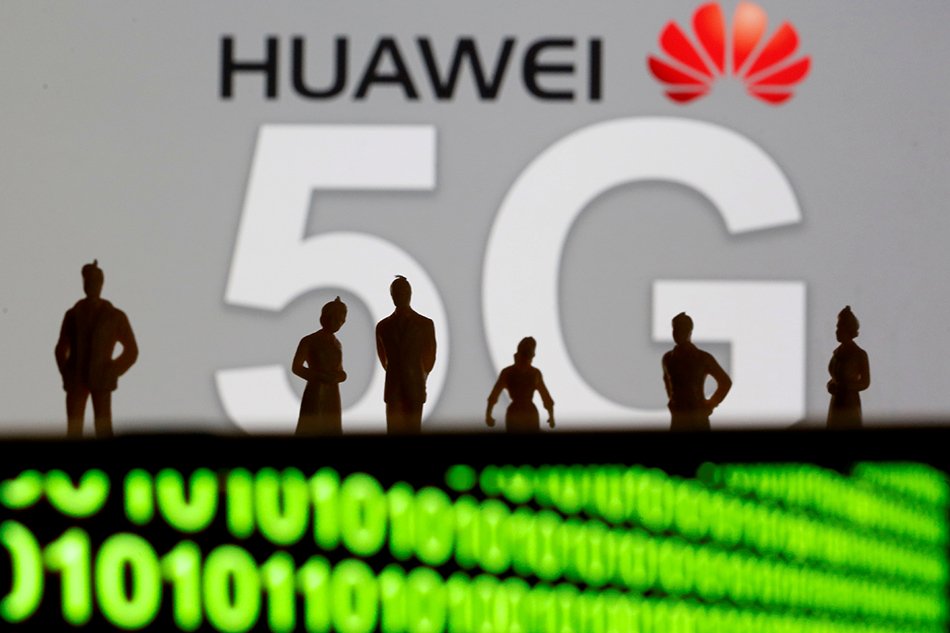
5G, Huawei, blockchain: Trends shaping technology in 2020


LONDON -- In 2020, will the wow factor return to consumer hardware? Will blockchain and 5G punch into the mainstream? Or will the world unify against Big Tech's tax-avoiding practices? 

AFP looks at 5 themes shaping the world of technology, after a year in which debate intensified over the industry's exploitation of its customers' privacy.

5G'S UNFULFILLED PROMISE

Super-fast fifth-generation network speeds are meant to revolutionize communications along with areas like urban transport.

But so far, 5G has failed to meet expectations due to the lagging build of infrastructure in many places. Apple has yet to launch a compatible phone, unlike rivals including Samsung.

The rollout should quicken next year as more countries install base stations and networking equipment -- although US President Donald Trump's war on Chinese sector leader Huawei remains a wild card.

As smartphone sales plateau around the world, manufacturers have been focusing more on ancillary services.

"You have to sell the entire experience, the entire ecosystem," Dominique Bindels, senior analyst for home and tech with London-based research firm Euromonitor International, told AFP.

Highlighting Apple's success in payments and peripheral devices such as AirPods, Bindels predicted that smart earphones, along with speakers and at-home devices connected on the "internet of things", would be among the more dynamic sectors in 2020.

Digital assistants such as Alexa and Siri may start talking to each other, after Amazon, Apple and Google this month formed an alliance with other industry players to develop a common standard for smart home devices.

Another trend could be consolidation in TV streaming, after Apple and Disney joined Netflix, Amazon Video and some national broadcasters in a crowded subscription market.

LEAP INTO THE QUANTUM DARK

For the industry at large, business consultancy Accenture this year coined the acronym DARQ to denote 4 major trends: distributed ledger technology (such as blockchain), artificial intelligence (AI), extended reality and quantum computing.

Unbreakable blockchain networks of computers have already been generating virtual currencies in the form of bitcoin and its ilk, bypassing the need for a regulator like a government or central bank. 

Facebook wants to make the tech respectable through its "Libra" project, but has hit political opposition around the world, and several financial partners have pulled out.

Unwilling to let private enterprise dictate terms, China and other nations are building their own digital payments systems, which could see fruition next year.

However, blockchain networks devour huge amounts of energy, and concerns will mount about their environmental impact as debate intensifies more broadly about tech's contribution to climate change.

THE PRICE OF PRIVACY

Most companies are now actively engaged across the spectrum of another tech acronym, SMAC: social, mobile, analytics and cloud. For consumers, SMAC is felt in how we communicate with friends and how we search and shop.

That is accentuating fears about privacy, after a series of data leaks at Facebook first laid bare how much of our online lives are exploited by companies and political parties.

"People are becoming more conscious of sharing data but also in the same moment, the Nest cameras and smart speakers are flying off the shelves," said Bindels.

"There's a huge divide. People have been learning to trade privacy for convenience. It's just another currency."

Amnesty International, in a hard-hitting study last month into Facebook and Google, said that trade-off amounts to a "Faustian bargain" which imperils our human rights.

TECH WARS

To Beijing's anger, Washington alleges that Huawei and another telecoms group, ZTE, are little more than shell fronts for Chinese spy chiefs.

Ni Lexiong, professor at the Shanghai National Defense Strategy Institute, said US sanctions depriving those firms of access to US components would only encourage China to stand on its own feet.

"In the end, once China has formed its own industrial chain in the field of artificial intelligence, the United States will also lose a large market," he said.

Samm Sacks, an expert on China's digital economy at the Washington think tank New America, said the tech standoff could harm progress in areas such as precision medicine and AI-based diagnoses.

The two countries have cooperated in research, "and severing that could have global consequences", she warned.

TAXING TIMES

The US presidential election next November will likely prove another flashpoint over disinformation peddled on social media. 

Democratic hopeful Elizabeth Warren wants Amazon, Facebook and Google to be broken up on anti-trust grounds.

The Organisation for Economic Cooperation and Development is meanwhile due by June 2020 to present a "unified approach" for richer countries to levy a digital tax on internet giants.

Some like France have gone ahead with their own tax, igniting another front in Trump's multifaceted trade wars as the US threatens tariffs on a range of French goods.

Agence France-Presse

Wednesday, December 11, 2019

America’s Top Foundations Bankroll Attack on Big Tech


WASHINGTON — Critics of big tech companies are eager to keep up their momentum — and some of the country’s wealthiest foundations are providing the financial firepower.

Major nonprofits, including the Ford and Hewlett Foundations, have pledged millions of dollars in total toward taking on the power of the country’s corporate giants like Facebook and Amazon. Other supporters include groups run by George Soros, the billionaire financier, and Pierre Omidyar, an eBay founder.

The foundations regularly fund critical looks at capitalism. The Ford Foundation, for example, supports many organizations that study and fight inequality. The Hewlett Foundation, whose lineage goes back to a founder of Hewlett-Packard and has a $10 billion endowment, has put a slice of its money toward organizations re-examining the free market economic policies that dominate Washington.

But the financial support is reaching new heights, and it could help the activists keep pressure on Silicon Valley by building the sort of political might that has powered liberal policy victories on issues like civil rights and net neutrality. Activists recently announced a coalition to take on Amazon, for example, that includes organizers around the country.

One of the groups receiving foundation money is led by Chris Hughes, a Facebook co-founder who now publicly argues for breaking up the social media giant. His group, the Economic Security Project, is pooling some of the money and then distributing it to projects focused on antitrust and concentration concerns. Hughes, wealthy from his time at Facebook, has contributed some of the money himself.

The Economic Security Project plans to give antitrust activists $10 million over the next 18 months. On Tuesday, the organization will announce how it plans to spend the first $3 million, putting the money toward grassroots organizers, researchers at several Washington think tanks and a group that recruits artists to make graphics that “expose how our economy really works.”

The coming years will test whether the efforts of the advocates can harness the skepticism about large corporations and the wealthy that is animating the Democratic presidential primary race. Federal and state officials have already announced investigations into Amazon, Facebook, Google and Apple. Ultimately, these advocates hope to address corporate concentration in numerous businesses, including drugs and farm products, and combat rising economic inequality.

They have their work cut out for them. Tech companies spend tens of millions of dollars on lobbying every year. And antitrust issues hinge on dense questions of law and economics that don’t fit on a bumper sticker.

“It’s not just about trends and corporate accountability,” said Maria Torres-Springer, vice president for US programs at the Ford Foundation, which has a $12 billion endowment. “It’s about creating and sustaining a movement that rebuilds political and economic power for everyday Americans.”

A leading beneficiary of the money is the Open Markets Institute, a research group whose focus on antitrust issues has been pivotal in making corporate concentration a matter of public debate. It expects to bring in more than $3 million in 2020, according to an internal document from the first half of this year. In 2016, before the group split off from a bigger organization, New America, its revenue topped out at just over $900,000.

This year, the Knight Foundation, which focuses on journalism, awarded Open Markets $2 million to study the impact that concentration among technology platforms has on the media. In September, the Ford Foundation gave it $200,000 to examine how tech monopolies affect workers. A public campaign it has led to break up Facebook will expand to include Google next year, according to Sarah Miller, the organization’s deputy director.

Hughes’ Economic Security Project is contributing to that campaign. It is also paying for Open Markets to conduct public opinion polling.

“Our view is you need an ecosystem,” Hughes said. “You need a community of people who generally share the same values but who, among themselves, may even have different approaches to the issues.”

Another progressive group, Jobs With Justice, plans to hold sessions next year explaining to people the antitrust case against tech companies in simple terms. In the draft script of the training, the session’s leader seizes on a simple metaphor, asking attendees to consider two lemonade stands.

The first stand belongs to someone whose family owns the local grocery store, so it gets its lemons free. The family’s neighbors, who opened a competing stand, aren’t so lucky. Over time, the first stand is able to slash its prices to undercut the second stand.

The session leader asks for a volunteer to play the person running the stand that can’t use a family connection to get free fruit. The volunteer has to decide whether to engage in a price war with the more powerful competitor while an organizer charts the volunteer’s dire financial situation on butcher paper.

Each situation ends with the volunteer’s lemonade stand closing and a revelation: Amazon, the session leader will tell participants, has used this tactic against its competitors.

“What we wanted to do was create some field materials, some training materials, just to even explain what a monopoly meant for people,” said Erica Smiley, Jobs With Justice’s executive director. “Outside of people maybe playing the board game, it’s kind of an old idea that maybe they learned in their fourth grade civics class but haven’t necessarily re-upped on.”

Smiley’s group is one participant in Athena, the new coalition organizing opposition to Amazon over antitrust, privacy and other concerns. The coalition says it wants to raise $15 million in its first 3 years.

Athena will receive money from Hughes’ fund, along with other groups trying to rally the grassroots to the cause.

Civil rights group Color of Change plans to use its funding from the project to pay for new hires to lead public campaigns around antitrust issues, while the Action Center on Race and the Economy will run “corporate campaigns designed to influence the public narrative on corporate concentration and win real victories for communities of color around the country.”

Other projects, like the artists’ group, are focused on finding new ways to explore the antitrust issue. Hughes’ group paid for a New York event in November — held by a project called the Museum of Capitalism — where people could play versions of the board game Monopoly that are meant to call out inequities in the economy.

Hughes will also finance some groups doing academic research on corporate concentration and intends to support more researchers in the future.

“If you’re going to see real change, you need a community of scholars who are in dialogue with one another,” he said.

Money is already flowing to campuses. In November, the Knight Foundation allocated $3.5 million to researchers to examine questions about digital platforms, including competition issues.

The foundation, along with Omidyar’s philanthropic network, has also provided the money to introduce an antitrust-focused initiative at Yale’s business school. In an interview, Sam Gill, a Knight executive, said the foundation had not yet taken a position on whether there should be an anti-monopoly movement but felt it was important to finance inquiries into the questions posed by major tech companies.

In recent years, more potential solutions to corporate concentration have emerged. While some believe in aggressive approaches like breaking up companies, others prefer new regulations or other measures.

At a conference at the University of Utah this fall, Dan Crane, a conservative law professor, challenged a group of participants including Tim Wu, a legal scholar and New York Times contributing opinion writer who is a leading voice calling for more aggressive antitrust enforcement. Crane pushed them to be more specific about the changes they would like to see in how antitrust laws are interpreted and enforced.

Over box lunches, the group wrote a statement, later published by Wu, listing legal precedents the group hopes will be overturned and policies it hopes will be enacted.

“Those who believe in a strong revival of antitrust, and a return to its anti-monopoly roots, have a duty to specify what, exactly, they mean, in concrete, legal detail,” the statement said.

Wu said that, among other purposes, the statement could be a test for judicial nominees. It’s a focus reminiscent of the playbook that helped build the conservative legal movement — which in turn shaped the antitrust laws Wu and his compatriots criticize today.

“Over a 30-year period, they won almost every one of those battles,” Wu said. “They just sort of said, ‘Here’s what it should be,’ and it happened.”


2019 The New York Times Company

source: news.abs-cbn.com

Tuesday, November 5, 2019

Web giants' wield 'irresistible power,' whistleblower Snowden warns


LISBON -- Technology has given internet giants "irresistible power" when they work in concert with governments, Ed Snowden told the Web Summit that opened in Lisbon on Monday.

"When we see government and corporations working in concert... they become the left and right hands of the same body. What we see is the concentration of power," he told the European celebration of startups and new technologies gathering high-tech entrepreneurs and investors.

"If you create an irresistible power... how do you police the expression of that power when it is used against the public rather than for it?" he asked, speaking by video link from Russia where he has lived since 2013.

The US government last month urged tech giants to allow police to read encrypted messages, saying access was essential to prevent serious crime despite privacy concerns.

Snowden has just published a book that lays out his reasons for passing tens of thousands of secret documents to major news organisations in 2013.

The files were compiled while he worked for the US National Security Agency and revealed a dense network of communications and internet scrutiny by the NSA and partner agencies around the world.

Snowden recognized that public awareness is growing over the abuses he has denounced, and he lauded efforts to protect privacy, especially in Europe.

But he told the gathering of some 70,000: "The problem is not data protection, it's data collection" and the blind faith that internet users must have in the internet's masters.

'HYPER-POLITICAL'

The four-day summit is expected to focus on politics and tax issues, as well as new mobilities, medical applications, robotics and crypto currencies, organizers said.

"Tech has become hyper-political," said Paddy Cosgrave, the Irish founder and boss of Europe's biggest tech gathering.

"Increasingly, the front page of newspapers around the world are dominated by issues relating to technology," he told AFP.

Among the main events are discussions on the future of money, cars, medicine, housing, advertising, medias and humans' presence in outer space.

But what has emerged as the leading topic is how high tech has become a crucial factor in the Chinese-US trade war, the monetary power of sovereign governments and the radicalization of social media.

As sector giants continue to face calls for fair taxation or even dismantlement, regulators such as the EU Commission's vice president and competition chief, Margrethe Vestager, are expected to draw a crowd.

Vestager is to close the summit on Thursday, speaking just after Michael Kratsios, who is being sent from the White House to present the US viewpoint on internet taxation and regulation.

Vestager has spearheaded European efforts to get companies like Amazon, Apple, Facebook and Google to pay more in taxes in countries where they earn large amounts of their profits.

In addition to her post as EU competition chief, the Dane has also now been tasked with overseeing digital activities across the 28-member bloc.

Vestager "is incredibly popular... because she's trying to create a level playing field for innovators in particular in Europe," Cosgrave told AFP.

CAMBRIDGE ANALYTICA

At another event, former Cambridge Analytica executive Brittany Kaiser is expected to outline risks to personal data in the run-up to the 2020 US presidential election.

The now defunct data consultancy allegedly hijacked personal data on Facebook users ahead of the 2016 US vote. 

Huawei's rotating chairman Guo Ping is another headliner.

He is likely to call for support from the tech community after the Chinese phone giant was banned from the United States owing to suspicion its systems could be used to collect data for Beijing.

A scheduled address almost certain to raise the issue of internet taxation is by Pascal Saint-Amans, head of the OECD's Centre for Tax Policy and Administration.

The Organisation for Economic Co-operation and Development is drafting a "unified approach" to a digital tax on internet giants and multinational groups to be presented by June next year.

source: news.abs-cbn.com

Friday, August 23, 2019

EXPLAINER: France's Macron seeks international tax on digital services


PARIS -- French President Emmanuel Macron is pressing ahead with a digital tax in France, a move US President Donald Trump described as "foolishness", and the French leader is keen to reach an international agreement on taxing big tech companies.

Late on Wednesday, Macron urged the Trump administration to help reform global corporate taxes.

Macron will seek common ground with Trump and other G7 leaders at a summit in Biarritz this weekend. Washington has expressed concern that US Internet companies are being unfairly targeted.

Here is a guide to the digital tax debate.

WHAT IS A DIGITAL TAX?

The governments of large European countries have been vexed by their inability to tax the profits of multinational tech companies that they believe are derived in their jurisdictions.

Internet giants such as Facebook, Google and Amazon are currently able to book profits in low-tax countries like Ireland and Luxembourg, no matter where the revenue originates.

Macron says taxing big tech more is a matter of social justice.

The French leader pushed hard for a digital tax to cover European Union member states, but ran up against resistance from Ireland, Denmark, Sweden and Finland.

WHAT HAS FRANCE DONE?

After talks on an EU digital tax foundered, Macron's government imposed its own unilateral tax.

The 3 percent levy applies to revenue from digital services earned by firms with more than 25 million euros in French revenue and 750 million euros ($830 million) worldwide.

Paris is not alone among European capitals in proposing a tax on big tech. Britain, Spain, Italy and Austria have also announced plans for their own digital levies.

WHAT DOES MACRON WANT TO ACCOMPLISH AT THE G7?

The goal now is to secure a broader agreement under the auspices of the G20 and the OECD. Macron wants G7 leaders to agree on the principle of a universal tax to provide impetus to this effort.

G20 finance ministers agreed in June to compile common rules to close tax loopholes and promised to "redouble efforts" for a consensus-based solution to be found by 2020.

G7 finance ministers agreed the following month that there should be a minimum level of tax to discourage countries from competing in a "race to the bottom".

"Now the G20 is set to discuss this issue further, there's not much left for the G7 to do," a Japanese government official said. "We (Japan) are hoping to keep in step with France. But that doesn't mean the G7 will decide anything new at this summit."

WHAT OBSTACLES LIE IN THE WAY?

Trump. The US president has already lambasted Macron's "foolishness" for pursuing a French digital levy and has threatened to tax French wines in retaliation.

The row illustrates how digital taxation could open up a new front in the trade spat between Washington and the EU as economic relations between the two appear to sour.

Trump's threat to punish France should not be taken lightly. It followed US Trade Representative Robert Lighthizer's office announcing an investigation into the French tax, which it called an unfair trade practice that penalised US tech companies for their commercial success.

Low-tax jurisdictions also have misgivings about Macron's tax plan because it would make it harder for them to attract foreign direct investment with the promise of ultra-low corporate taxes.

source: news.abs-cbn.com

Tuesday, August 20, 2019

4 ways Apple, Amazon, Facebook and Google can be reined in


The Justice Department is investigating them, as is the Federal Trade Commission. Congress and state attorneys general have their sights on the companies, too.

There is no shortage of people arguing that America’s large technology companies — namely Apple, Amazon, Facebook and Google — have gotten too big and too powerful. That has helped spur the scrutiny by the government officials.

But what to do about the issue? On that, the industry’s critics are split.

Some would like to see the businesses broken up. Others want more robust regulation. And there are shades of gray on both sides. Here are four of the most prominent prescriptions being debated.

BRIGHT-LINE BREAKUPS

This is the most drastic surgery, splitting off large portions of the big tech companies.

The guiding principle is simple. If you own a dominant online marketplace or platform, you cannot also offer the goods, services and software applications sold on that marketplace.

So Amazon could not own the leading e-commerce marketplace and sell Amazon-label goods there. Or Google could not have both the dominant search engine and its Google Shopping service, which shows up in search results. Apple could own an app store that offers music services, but not also its own music service sold there. And so on.

Bundling businesses on top of a dominant platform invites conflicts of interest and discrimination against rivals, thwarting competition, proponents of this countermeasure say.

“The world is going to be better off after we break up these companies,” said Barry Lynn, executive director of Open Markets Institute, a research and advocacy group.

Sen. Elizabeth Warren, D-Mass., has embraced the idea of bright-line breakups in her presidential campaign.

But such a sweeping overhaul of the tech industry could bring unknown risks for the companies and shareholders. Many economists are leery of broadly prohibiting companies from entering new businesses, fearing potential losses of efficiency and consumer welfare.

The last big government-mandated breakup targeted AT&T in the early 1980s, and that was the dissolution of a government-granted monopoly.

Still, the idea is not unthinkable. The remedy initially proposed in the government’s antitrust case against Microsoft in the 1990s, endorsed by three leading economists, was to split the Windows operating system business from Microsoft’s Office productivity software business. After George W. Bush was elected president, his administration settled the case without a breakup.

SELECTIVE SPLIT-UPS

This is a case-by-case approach to breakups rather than a broad rule applied to all the tech giants. A current example is a plan that would require Facebook to shed Instagram and WhatsApp. A detailed proposal on this, laying out the alleged anti-competitive conduct, was developed by two leading antitrust scholars, Tim Wu of Columbia Law School and Scott Hemphill of New York University Law School, along with Chris Hughes, a co-founder of Facebook. (Wu is also a contributing opinion writer for The New York Times.)

The three have made their presentation to federal and state antitrust regulators and to congressional investigators. They explain that starting about 2010, when mobile computing and photo-sharing services were taking off and Facebook was lagging in those areas, the social network embarked on a years long campaign to buy nascent competitors.

The biggest purchases were of the photo-sharing service Instagram in 2012 and the messaging service WhatsApp in 2014.

Typically, regulators challenge mergers when they give a company a big share of an established market. That was not the case when Facebook paid $1 billion for Instagram, a startup with 13 employees in an emerging field.

Instead, the three argue, the strategy was to buy out budding threats. “We think that’s the better perspective of what was going on — maintenance of monopoly in the social network market,” Hemphill said.

In Facebook’s case, Wu said, “the remedy is straightforward: Unwind the acquisitions.”

But an issue in spinning off a unit like Instagram is whether doing so enhances competition. Would a stand-alone Instagram be a real rival to Facebook, or would consumers simply stay with the dominant social network, Facebook, and Instagram suffer?

A NEW TECH WATCHDOG

Getting breakups approved by the nation’s courts, which are generally conservative on economic matters, would be a stretch. Besides, some experts argue, a more comprehensive way to police the big tech companies would be with a beefed-up force of regulators.

One idea is the creation of a new regulator, a Digital Authority. It would be an expert group to supplement traditional antitrust regulators in the Justice Department and the Federal Trade Commission. It would be able to move faster and have the expertise to constantly track the tech markets and trends.

“Its mandate would be to protect competition,” said Fiona Scott Morton, an economics professor at the Yale University School of Management.

The new regulator was the central recommendation of a recent report about the digital platforms that was sponsored by the Stigler Center for the Study of the Economy and the State at the University of Chicago. Scott Morton led a group of eight antitrust experts and technologists who worked on the study. Since the report was released in May, members of the group have made a series of presentations to policymakers.

In online markets, the flywheel of network effects — the more people who use a service, the more users, developers and advertisers it attracts — is especially powerful, creating dominant companies. Yet even in digital markets, the door to new entrants must remain open, said Scott Morton, a former senior official in the Justice Department’s antitrust division.

In traditional antitrust, regulators and courts move at a measured pace, slowly and often after the fact. The goal of a new digital regulator, she said, “would be to save the rival before it is killed.”

The authority, Scott Morton said, could receive a complaint from a competitor and schedule a hearing two weeks later, when both sides would present testimony.

A new regulator? It would be a tough sell in today’s political environment. But we do have specialist federal regulators in many other industries, including banking, aviation, transportation, drugs and agriculture.

Reining in the big tech companies, Scott Morton said, is increasingly becoming a bipartisan concern. “At some point, society will say this is too much power without real oversight,” she said.

UNLOCK THE DATA

There are also narrower, targeted regulatory proposals. Some of these involve rules that would loosen a dominant company’s control of user data, by either forcing that company to share the data with a smaller competitor or giving users more ability to take their data from one service and move it to a competitor. The Stigler Center study cited those data moves in a list of potential regulations and enforcement actions.

The idea, broadly, is that data can be a barrier to competition, and that freeing up the personal information collected by the tech giants could lower that barrier.

The big online platforms are data monetization machines, collecting, analyzing and exploiting information from consumers, merchants, advertisers and others. And the network effect of data is formidable. The more data the companies have, the more fuel to feed the machine-learning algorithms that power their businesses.

“Data is the real trump card these platforms have,” said A. Douglas Melamed, a professor at Stanford Law School and a member of the Stigler Center study team.

Melamed, a former senior antitrust official at the Justice Department, favors a rule that would require dominant digital platforms to give other companies access to their user data for a fee. That would help level the playing field for new entrants and other rivals, he said, but wouldn’t be free for them, either.

“You let the competitors have access to their backrooms for a reasonable fee,” Melamed said. Such a solution would require regulatory oversight to set guidelines for fair licensing terms. Data sharing would also entail some privacy risk, since no privacy-protection technique is foolproof.

A related idea is to mandate that tech companies make user data portable. That means consumers could move their information from one service to another, forcing digital businesses to compete with superior offerings rather than data lock-in.

The regulator would need the technical skills to ensure that the consumer data was handed over in a way that would let a competitor use it easily.

“The details are crucial, if you’re really going to give consumers more choice and control,” said Jamie Morgenstern, a computer scientist at the Georgia Institute of Technology who worked on the study.


2019 The New York Times Company

source: news.abs-cbn.com

Wednesday, July 10, 2019

Big Tech execs due on Capitol Hill for antitrust hearing


WASHINGTON -- Executives from Amazon.com Inc, Apple Inc, Facebook Inc and Alphabet's Google will testify before a House of Representatives congressional committee next week in a hearing to discuss the tremendous market power wielded by online platforms.

In a statement on Tuesday, the House Judiciary Committee's antitrust subcommittee said witnesses would include: Adam Cohen, director of economic policy at Google; Nate Sutton, associate general counsel for regulation at Amazon; Facebook's Matt Perault, head of global policy development and Apple vice president for corporate law Kyle Andeer.

The hearing will be held on Tuesday, July 16, the advisory said.

Apple and Google did not respond to a request for comment. Facebook had no immediate comment. Amazon spokeswoman Jodi Seth said they will testify, but did not share details.

Separately, a subcommittee of the Senate judiciary panel said in a notice on Tuesday that it had also scheduled a hearing for July 16. It was not immediately clear who would attend.

The hearings come as the House Judiciary Committee is probing competition in digital markets as part of an investigation announced last month, with both Republicans and Democrats expressing concern about the power exercised by several of the world's most valuable companies.

The executive branch has antitrust probes underway with the Justice Department looking at Google and Apple while the FTC probes Facebook and Amazon.

The hearing also comes at a time when both Republicans and Democrats have expressed exasperation with the big tech giants, but for different reasons.

Conservatives, including US President Donald Trump, have complained that social media companies try to diminish their voices online.

Meanwhile, progressives like presidential candidate Elizabeth Warren have called for Amazon, Google and Facebook to sell companies that they purchased previously as a way to address competition concerns.

Furthermore, Facebook is expected to pay a $5 billion penalty for its work with a consultancy firm Cambridge Analytica, which obtained data from millions of Facebook users without their permission. Cambridge was hired by President Donald Trump for his 2016 US presidential election campaign.

Social media and technology executives have been called to testify before lawmakers in high-profile hearings on various subjects over the past two years, including on foreign influence operations on their platforms. 

source: news.abs-cbn.com