Showing posts with label Supreme Court. Show all posts

Tuesday, September 24, 2019

UK Supreme Court rules PM Johnson acted unlawfully by suspending parliament


LONDON - The United Kingdom's Supreme Court ruled on Tuesday that Prime Minister Boris Johnson acted unlawfully when he advised Queen Elizabeth to suspend parliament just weeks before Brexit and that therefore the legislature had not been prorogued.

"The decision to advise her Majesty to prorogue parliament was unlawful because it had the effect of frustrating or preventing the ability of parliament to carry out its constitutional functions without reasonable justification," Supreme Court President Brenda Hale said.

The ruling was a unanimous decision by the court's 11 presiding judges.

"Parliament has not been prorogued. This is the unanimous judgment of all 11 justices," Hale said. "It is for parliament, and in particular the speaker and the lords speaker, to decide what to do next."

Parliament was suspended, or prorogued in the British jargon, from Sept. 10 to Oct. 14. The prorogation was approved by Queen Elizabeth, Britain's politically neutral head of state, acting on the advice of the prime minister as she is required to do under the country's complex, uncodified constitution. 

source: news.abs-cbn.com

Tuesday, June 18, 2019

US Supreme Court sends lesbian wedding cake dispute back to lower court


WASHINGTON - The US Supreme Court on Monday threw out a lower court ruling against the owners of an Oregon bakery who refused based on their Christian beliefs to make a wedding cake for a lesbian couple in another case pitting gay rights against religious rights.

The justices sent the case back to an Oregon court so it can reconsider its ruling against the bakery owners in light of the Supreme Court's June 2018 decision in a strikingly similar case from Colorado.

The state court will have to come up with a new decision and potentially could rule against the bakery owners, Melissa and Aaron Klein, a second time even after taking into consideration last year's Supreme Court decision in favor of a Denver-area Christian baker who had refused to make a cake for two gay men. In December 2017, the Oregon court had let stand a lower state court ruling against the Kleins.

They ran a bakery called Sweetcakes by Melissa in Gresham, a city just east of Portland, and were contesting Oregon's a $135,000 penalty for violating a state anti-discrimination law by spurning the couple, Rachel Bowman-Cryer and Laurel Bowman-Cryer. The Kleins argued that the state fine violated the their rights of free speech and free exercise of religion under the U.S. Constitution's First Amendment.

In the narrow ruling last year, the Supreme Court ruled 7-2 in favor of the Colorado baker who refused to make a wedding cake for a gay couple, citing his Christian faith.

The decision left unresolved the bigger question of whether certain businesses can claim religious exemptions from anti-discrimination laws.

The justices will have another chance to weigh in on the broader questions in the coming months when they consider whether to hear an appeal by a Washington state florist who refused to sell a gay couple flowers for their wedding. The Washington Supreme Court on June 6 ruled against the florist.

RELIGIOUS REASONS

The Oregon cake dispute began in 2013 when Aaron Klein told Rachel Bowman-Cryer and her mother, Cheryl McPherson, that Sweetcakes did not make cakes for same-sex weddings for religious reasons.

The Kleins had previously made a cake at the request of the same lesbian couple for McPherson's previous heterosexual wedding. The lesbian couple, who married in 2014 and have two children, said they wanted to order the exact same cake.

When McPherson returned to the shop to protest, Aaron Klein quoted a Bible passage: "You shall not lie with a male as one lies with a female, it is an abomination."

The Oregon Bureau of Labor and Industries, responding to a complaint filed by the gay couple, imposed the penalty after finding that the Kleins had violated an Oregon public accommodations law that bars the denial of service based on sexual orientation.

Lawyers for the Kleins, from the conservative group First Liberty Institute, have said the bakery was driven out of business because of the dispute.

The state in court papers called the case a straightforward example of denial of service based on sexual orientation. The Kleins did not discuss the design of the cake or what message it would convey before refusing to make it, the state's lawyers said.

The Oregon Court of Appeals, an intermediate appeals court, ruled in 2017 rejected the constitutional challenge by the Kleins. The law "simply requires their compliance with a neutral law of general applicability, and the Kleins have made no showing that the state targeted them for enforcement because of their religious beliefs," the state court said. The Oregon Supreme Court refused to hear the case in June 2018, just after the justices ruled in the Colorado case.

Of the 50 states, 21 including Colorado and Oregon have anti-discrimination laws protecting gay people.

source: news.abs-cbn.com

Tuesday, October 2, 2018

Former classmate says Trump court nominee lied about his drinking


WASHINGTON - A one-time classmate of President Donald Trump's Supreme Court nominee said Monday that Brett Kavanaugh was a habitual heavy drinker, challenging the judge's Senate testimony to the contrary. 

The comments came days after the FBI opened a Senate-requested probe into allegations by three women that a drunken Kavanaugh sexually abused them or engaged in sexual misconduct while they were students in the 1980s.

"I can unequivocally say that in denying the possibility that he ever blacked out from drinking and in downplaying the degree and frequency of his drinking, Brett has not told the truth," Chad Ludington told reporters.

The North Carolina State University professor, who said he had contacted the FBI with his information, indicated in a statement Sunday that Kavanaugh was "belligerent and aggressive" when he drank.

Earlier, Trump had defended his pick but admitted that the appeals court judge has had a "bit of difficulty" with alcohol.

In a White House press conference, the US president sought to excuse excessive drinking by teenagers, while going beyond Kavanaugh's own testimony on his past use of alcohol to the Senate Judiciary Committee last week.

"I was surprised at how vocal he was about the fact that he likes beer," the president said.

"He's had a little bit of difficulty. He talked about things that happened when he drank. This is not a man that said... he was perfect with respect to alcohol."

He also questioned why investigators needed to examine the 53-year-old Kavanaugh's high school record.

"I think it's very unfair to bring up things like this," Trump said.

"I graduated from high school and while I did not drink, I saw a lot of people drinking," he said.

"They drink beer and go crazy and they were in high school... Does that mean that they can't do something they want to do in their life?" 

He returned to the theme during a campaign rally in Tennessee, where he accused opposition Democrats of being motivated by politics. 

"They have been blind in a blind rage ever since they lost the 2016. They have gone loco," he told supporters.

'I LIKE BEER' 

In Thursday's extraordinary hearing, Kavanaugh vehemently denied the sexual abuse allegations, and also aggressively challenged suggestions he had a drinking problem at the time.

"I drank beer with my friends. Sometimes I had too many beers," he told the panel. 

"Yes, we drank beer. I liked beer. I still like beer," he said.

"If every American who drinks beer or every American who drank beer in high school is suddenly presumed guilty of sexual assault, it will be an ugly, new place in this country."

The New York Times also reported that Kavanaugh was questioned but not charged by police after a 1985 bar fight in New Haven, Connecticut where he was accused of throwing ice on a fellow patron. 

A witness said that a friend of Kavanaugh's then threw a glass that hit the same patron in the ear, causing bleeding.

US media meanwhile reported that the FBI had begun their interview of Mark Judge, Kavanaugh's former best friend and a key figure in the misconduct allegations leveled by Christine Blasey Ford.

Judge's interview started but "has not been completed," his attorney said in a statement quoted by Fox News.

In last week's hearing, Blasey Ford said Judge witnessed Kavanaugh's alleged assault and jumped on top of them as it happened, sending all three tumbling and allowing her to escape.

CLOCK TICKING

Trump meanwhile said the White House would not restrict the new FBI probe, requested by senators before they take a final vote on Kavanaugh.

"I think the FBI should do what they have to do to get to the answer," Trump said.

"I want it to be comprehensive... With that being said, I would like to go quickly," he added.

"We don't want to go on a witch hunt, do we?"

Senators, including Republican Jeff Flake, struck a deal Friday that gives the FBI one week to conduct its investigation and deliver its report.

Senate Majority Leader Mitch McConnell said the Senate, made up of 51 Republicans and 49 Democrats, will be "voting this week" on advancing the Kavanaugh nomination, setting up a possible final confirmation vote this weekend or early next week.

"The time for endless delay and obstruction has come to a close," McConnell said.

Last week, Flake expressed eagerness to see Kavanaugh confirmed but said he wanted a "better process" for assessing the allegations. Flake said over the weekend that he would vote for Kavanaugh unless the FBI finds something in its investigation.

bur-ia/amz

source: news.abs-cbn.com

Tuesday, June 5, 2018

US top court rules for baker in gay wedding cake case


WASHINGTON - The US Supreme Court delivered a historic but limited victory Monday to a Colorado baker who refused to design a wedding cake for a same-sex couple, in a closely-watched case pitting gay rights against religious liberty.

In a 7-2 decision, the high court ruled that while the Colorado Civil Rights Commission determined that Masterpiece Cakeshop must serve clients regardless of sexual orientation, the panel showed "clear and impermissible hostility" toward the baker's religious beliefs.

The commission's bias therefore violated baker Jack Phillips's rights under the US Constitution's First Amendment, the justices found.

But they did not definitively rule on the issue of whether a business can decline to serve gays and lesbians based on religious views, meaning the broader contentious issue is likely to simmer.

The Supreme Court legalized same-sex marriage nationwide in 2015, and Colorado law prohibits discrimination on the basis of sexual orientation.

Bakery owner Jack Phillips had argued that he refused to serve the couple, David Mullins and Charlie Craig, when they walked into his shop in 2012 because he opposed their planned marriage on religious grounds.

The Colorado commission's "hostility was inconsistent with the First Amendment's guarantee that our laws be applied in a manner that is neutral toward religion," Justice Anthony Kennedy wrote in an 18-page majority opinion.

"The outcome of cases like this in other circumstances must await further elaboration in the courts, all in the context of recognizing that these disputes must be resolved with tolerance, without undue disrespect to sincere religious beliefs and without subjecting gay persons to indignities when they seek goods and services in an open market."

He noted that the panel's "official expressions of hostility to religion" was "inconsistent" with its strict requirement for neutrality.

Two liberal justices, Stephen Breyer and Elena Kagan, joined the conservatives in the majority ruling on the most significant case for gay rights since the high court approved same-sex marriage.

Justice Ruth Bader Ginsburg and Sonia Sotomayor dissented, arguing that the commission's alleged hostility played only a minor role.

"What matters is that Phillips would not provide a good or service to a same-sex couple that he would provide to a heterosexual couple," Ginsburg wrote.

US Attorney General Jeff Sessions said he was pleased with the decision.

"In this case and others, the Department of Justice will continue to vigorously defend the free speech and religious freedom First Amendment rights of all Americans," Sessions said in a statement.

Last year, President Donald Trump's administration weighed in on the side of Phillips, as the Justice Department filed a brief arguing that his First Amendment right of free expression had been violated.

'OBJECTIONABLE MESSAGE

Mat Staver, chairman of the conservative Liberty Counsel, called the decision a "huge victory for the religious rights" of private citizens.

"A person should be free to refuse to be used as a mouthpiece for an objectionable message," he said.

In December, Phillips's lawyers argued before the court that while the baker was perfectly willing to sell ready-made products to anyone, a wedding cake can be considered artistic expression, and such creations can express a message -- something Phillips was not prepared to do for a gay couple.

The cake case became a flashpoint in American political circles in recent years, with Republican lawmakers eager to plant the flag of religious freedom in backing the baker.

"Today, the Supreme Court took a stand for religious liberty against the unconstitutional demands of an oppressive bureaucracy," Senator Ted Cruz said in a statement.

The American Civil Liberties Union, which argued the case on behalf of Mullins and Craig, said the ruling represented a victory for the core principle upholding fair business practices for all.

"The court reversed the Masterpiece Cakeshop decision based on concerns unique to the case, but reaffirmed its longstanding rule that states can prevent the harms of discrimination in the marketplace, including against LGBT people," said ACLU deputy legal director Louise Melling.

The Supreme Court's punt on the broader issue of whether a business can invoke religious objections in order to refuse service assures that the subject will remain a major American debate.

Mullins and Craig said in a statement that their fight against discrimination would continue.

"We brought this case because no one should have to face the shame, embarrassment and humiliation of being told 'we don't serve your kind here' that we faced, and we will continue fighting until no one does," they said.

source: news.abs-cbn.com

Friday, May 11, 2018

Sereno: I turned down 'offers' to mend ties with Duterte


MANILA - Ousted Chief Justice Maria Lourdes Sereno on Friday said she rejected earlier "offers" to have a dialogue with President Rodrigo Duterte to mend ties and ask for the withdrawal of the impeachment complaint and quo warranto petition filed against her.

"May mga offer. May mga ideya na ganyan na ang solusyon sa problema ay pakikipag-usap o pagbabati," Sereno told reporters without divulging who volunteered to set up a meeting between her and the president.

(There were offers. There were ideas floated that mending ties with Duterte would be the solution to my problems.)

Sereno said she turned down the offers and idea as she felt that it would compromise the judiciary's independence.

"Hindi ako nakipagkompromiso. Nanindigan ako. Kung ako ay nag-compromise dun, hihina ako (as chief justice)," she said.

(I did not compromise. I stood firm. If I compromised, I would become a weak chief justice.)

"Hindi puwede na ang politicians ang magsasabi o magdidikta sa bayan, kailangan Constitution," she said.

Sereno was ousted as top magistrate after 8 of her colleagues voted in favor of the Solicitor General's petition to nullify her appointment in 2012 for not submitting all her Statements of Assets Liabilities and Net worth (SALNs) when was applied for the post.

An impeachment case against Sereno is still pending at the House of Representatives where Duterte enjoys a "super majority," but the SC ruling makes it moot. 

Sereno, the youngest and the first female chief justice of the Philippines, said she had no regrets that she brushed off the offer to "play politics" with the executive department.

"An outsider, reformer, and someone who is not willing to play politics should be anticipating this outcome," she said.

Earlier this year, Duterte said he considered Sereno his "enemy" after she urged him to explain why the government's lawyer was seeking the invalidation of her appointment.

source: news.abs-cbn.com

Wednesday, November 29, 2017

Hawaii urges U.S. Supreme Court to reject Trump's travel ban


WASHINGTON - The state of Hawaii on Tuesday urged the U.S. Supreme Court not to allow President Donald Trump's latest travel ban that would bar entry of people from six Muslim-majority countries to go into full effect after it was partially blocked by lower courts.

Lawyers for the Democratic-governed state, which filed a legal challenge to the ban, were responding to the Trump administration's request last week asking the conservative-majority court to allow the ban to go into effect completely.

Hawaii's lawyers wrote that the latest ban, Trump's third, discriminates against Muslims in violation of the U.S. Constitution and is not permissible under immigration laws.

On Nov. 13, the San Francisco-based 9th U.S. Circuit Court of Appeals allowed the ban to go partly into effect, lifting part of a district court judge's nationwide injunction.

The Republican president's ban was announced on Sept. 24 and replaced two previous versions that had been impeded by federal courts.

The ban currently applies to people from Iran, Libya, Syria, Yemen, Somalia and Chad who do not have connections to the United States. Those with family relationships and other formal connections with the United States, such as through a university, can enter the country.

In a separate case in Maryland spearheaded by the American Civil Liberties Union, a federal judge partly blocked the ban. The administration has also asked the Supreme Court for that injunction to be lifted.

The ban also covers people from North Korea and certain government officials from Venezuela, and lower courts have allowed those provisions to go into effect.

Trump has said the travel ban is needed to protect the United States from terrorism by Muslim militants. As a candidate, Trump had promised "a total and complete shutdown of Muslims entering the United States."

source: news.abs-cbn.com

Tuesday, November 28, 2017

SC allows justices to attend Sereno impeach hearings


MANILA -  The Supreme Court has voted Tuesday to allow magistrates and employees to participate in the impeachment hearings against Chief Justice Maria Lourdes Sereno, a spokesman said.

"Those who are invited to testify on administrative matters may do so if they wish. The court is not requiring them but is granting them clearance if they so wish to appear and testify on administrative matters," Supreme Court spokesperson Theodore Te said.

The House justice committee invited SC magistrates and several employees to the hearings to answer allegations that Sereno bypassed her colleagues and falsified several court orders, including a temporary restraining order drafted by Associate Justice Teresita Leonardo-De Castro in 2013.

Te explained that Leonardo-De Castro has been authorized to testify on 3 matters only: the issuance of the TRO in the seniors' citizens cases and exchange of communication with Sereno; the merits of the decision on the clustering case involving the Judicial and Bar Council; and the merits of her separate concurring opinion in the case involving then Solicitor General and now Associate Justice Francis Jardaleza.

De Castro, Associate Justice Noel Tijam, and retired justice Arturo Brion have said they will attend the impeachment hearings once they get clearance from the SC en banc, justice panel chairperson Reynaldo Umali told DZMM.

Sereno is accused of misdeclaring her wealth and having an extravagant lifestyle.

Congressmen are determining if there is probable cause to pursue the impeachment case against the Chief Justice.

Sereno, who has denied any wrongdoing, refused to attend the hearings.

source: news.abs-cbn.com

Monday, February 13, 2017

SC affirms forfeiture of Marcoses' Malacañang jewelry collection


MANILA- The Supreme Court has affirmed a Sandiganbayan ruling in June 2014 in favor of the forfeiture of the so-called Malacañang Jewelry collection (Malacañang Collection) of the Marcos family.

In a 21-page decision dated January 18, 2016, penned by Chief Justice Maria Lourdes Sereno, the high court ruled that it found "no reversible error in the ruling of the Sandiganbayan" over the seized jewelry collection, one of three forfeited collections, seized from the presidential palace after the 1986 People Power Revolution, and transferred to the Central Bank on March 1, 1986.

The anti-graft court issued a Partial Summary Judgment on January 13, 2014 and a resolution for the forfeiture of the collection on June 11, 2014, through a Special Division.

The high court said the Sandiganbayan was correct to grant the forfeiture in favor of government.

"[T]he Sandiganbayan correctly held that the forfeiture was justified and that the Malacañang Collection was subject to forfeiture.

"We reiterate what we have already stated in Republic vs Sandiganbayan, and subsequently in Marcos vs Republic, that 'whenever ang public officer or employee has acquired during his incumbency an amount of property which is manifestly out of proportion to his salary.... said property shall be presumed prima facie to be unlawfully acquired," the SC said.

Based on a 1991 valuation of auction house Christie, Manson and Woods Intl., Inc., the subject collection was US $110,055 to US $153,089.

source: news.abs-cbn.com

Sunday, November 27, 2016

Martial law survivor asks SC to reverse Marcos burial


MANILA - Martial Law survivor and Albay Rep. Edcel Lagman has asked the High Court to reverse the burial of Ferdinand Marcos at the Libingan ng mga Bayani on behalf of the desaparecidos or those who went missing at the height of the dictatorship.

In a statement, Lagman said, ""It is not hard to comprehend that the interment of Marcos in the Cemetery of Heroes is inextricably intertwined with the late dictator's imposition of martial law which spawned inordinate oppression, corruption and plunder for 14 ignominious years and even beyond."

"It is not difficult to understand that allowing his burial in the Libingan ng mga Bayani is a veritable honor accorded to a disgraced President and Commander-in-Chief who was deposed by the sovereign people for having committed grievous sins against the Filipino people as acknowledged by no less than the Honorable Supreme Court in a number of landmark decisions and validated by foreign judicial tribunals."


Lagman said Marcos' burial is an impediment to the continuing quest for justice for the victims of martial law, adding that it "perpetuates the impunity of his transgressions and mocks the unfinished task of recovering his hoard of ill-gotten wealth."

"These are the very reasons why the Marcos burial in LNMB transcends politics. These are the very reasons why President Duterte's policy on burying Marcos in the LNMB is not a political question which is beyond the judicial scalpel to excise.

"These are the very reasons why such a policy is flawed and its implementation is tainted with gross abuse of discretion amounting to lack or excess of jurisdiction because it violates the Constitution, relevant statues and pertinent decisions of the Honorable Supreme Court, all of which are justiciable.

"It is not remote to realize that the Marcos burial in the Libingan ng mga Bayani is a gross distortion, a malevolent revision and a wanton derogation of Philippine history."


 Lagman invoked the following grounds for reconsideration:

1. Marcos' burial in the Libingan ng mga Bayani (LNMB) will not lead to closure.

2. AFP Regulations G 161-375 dated September 11, 2002 issued by the Department of National Defense is not effective and enforceable, and consequently, it could not be the basis for the interment of Marcos in the LNMB.

3. There are laws and Supreme Court decisions which militate against and effectively prohibit the Marcos burial in the LNMB.

4. The message of the EDSA people power revolution is clear and resounding: Marcos was ousted for being a despot, plunderer and violator of human rights.

5. When the totality of Marcos as a man is weighed in the balance, whatever achievements he has done for the country are completely nullified by his cardinal sins against the nation, for which he is not entitled to be buried in the LNMB.

6. The Marcos family had waived his burial in the LNMB 24 years ago.

7. The petitions do not involve a political question, which is an almost extinct invocation.

8. Respondents committed grave abuse of discretion amounting to lack or excess of jurisdiction.

9. Petitioners have legal personality to file cases, did not violate the "hierarchy of courts" doctrine, and did not have to exhaust administrative remedies.

10. Ferdinand Edralin Marcos does not deserve the honor of being interred in the Libingan ng mga Bayani even as a former President and soldier per se.


Lagman said that no closure would be achieved if it is at the expense of the victims of the brutalities and corruption of Marcos' martial law regime, and for the hollow gratification and flawed vindication of a tyrant and his heirs.

He added that the speed and stealth by which the Marcos burial was carried out by the immediate members of the Marcos family shows their incorrigible addiction to deception, underhandedness and abuse, which the Supreme Court must never condone.


According to Lagman, the majority decision erred in solely basing the burial of Marcos in the LMNB on AFP Regulations G 161-375 because the said issuance by the Department of National Defense is not effective and enforceable for absence of registration with the Office of the National Administrative Registrar (ONAR) of the University of the Philippine Law Center as required by the Administrative Code of 1987.

Lagman renewed his plea for the exhumation of "whatever was interred as Marcos mortal remains" at the LMNB on 18 November 2016 despite the lack of finality of the challenged Decision together with its ancillary directive lifting the Status Quo Ante Order.

He also prayed for the forensic examination on whatever is exhumed to determine what actually was buried at the LMNB.

He sought the reversal of the decision and the issuance of a writ of prohibition enjoining the public respondents from implementing the order of President Duterte on the Marcos burial.

source: news.abs-cbn.com

Monday, June 29, 2015

Jubilant NY crowds celebrate gay marriage ruling at pride march


NEW YORK, United States - Under a sea of rainbow flags, hundreds of thousands of people packed the streets of New York on Sunday for the annual Gay Pride March, celebrating the US Supreme Court's landmark ruling legalizing same-sex marriage nationwide.

Despite the persistent chilly rain, organizers said as many as two million people could attend -- including 22,000 people marching in the parade itself down Fifth Avenue.

Derek Jacobi and Ian McKellen, two of Britain's most famous openly gay actors, served as the grand marshals of the parade.

Also leading the march was Kasha Jacqueline Nabagesera, founder of the LGBT rights organization Freedom & Roam Uganda. Homosexuality remains illegal in that African nation and can carry a life prison sentence.

"We march today with the New Yorkers and America in support of their rights, but I also hold the march in support of my struggle," she told AFP.

The march began at around mid-day after a minute's silence for those who could not attend, including people who had died of AIDS or been killed in hate crimes.

Any somber feelings were soon displaced and the festive atmosphere returned after the actor Tituss Burgess sang the American national anthem.

Many other well-known figures attended, including New York Mayor Bill de Blasio, who wore a tie with rainbow stripes and carried a rainbow flag, the symbol of the gay rights movement. He attended with his wife and two children.

In the crowd, families mixed with scantily clad transvestites. Teens wore short rainbow tutus, and many carried signs that simply said "Love."

Ruling important for young people

In scenes that would have been tough to imagine 45 years ago, when New York cops would raid gay bars and homosexuality was illegal, many revelers reflected on what the Supreme Court ruling means for America.

One man in his 40s, who only gave his name as Dune, came to the march with his partner Jason. The two say they have plans to wed.

"I am a teacher," Dune told AFP. "This decision of the Supreme Court means a great deal for young people, especially teenagers."

He said it remains difficult for teenagers to come out, and doing so can still be dangerous. The Supreme Court ruling will help change that, he said.

"I live in New York, I am an adult. But for kids, they are the ones that are going to benefit down the road."

The court on Friday made same-sex marriage legal throughout the nation, capping a lengthy effort for marriage equality that had seen 37 states allow gay marriage but 13 hold out against it.

March organizers said on Twitter they would be performing free weddings during the day Sunday.

Discrimination persists

Richard Ahlgren, 55, came from the neighboring state of Connecticut.

He welcomed the Supreme Court ruling but said the gay community nevertheless still faces discrimination.

"There are other problems," Ahlgren said. "As far as housing, employment, there is still discrimination out there -- problems that we need to fix, until we are 100 percent free."

New York's first gay rights march was held in 1970, a year after a now notorious incident in which police raided a famed Greenwich Village gay bar called the Stonewall Inn, prompting riots in the gay community.

Not everyone was happy about the Supreme Court decision. A group of Orthodox Jews carried a large banner stating: "In God we trust. The Almighty in his Torah forbids same-sex marriage."

San Francisco was also hosting gay pride events this weekend. One spectator was injured there Saturday night in a shooting that stemmed from an argument unrelated to the event.

source: www.abs-cbnnews.com

Friday, October 17, 2014

DOJ: Binay can't dictate what we can investigate


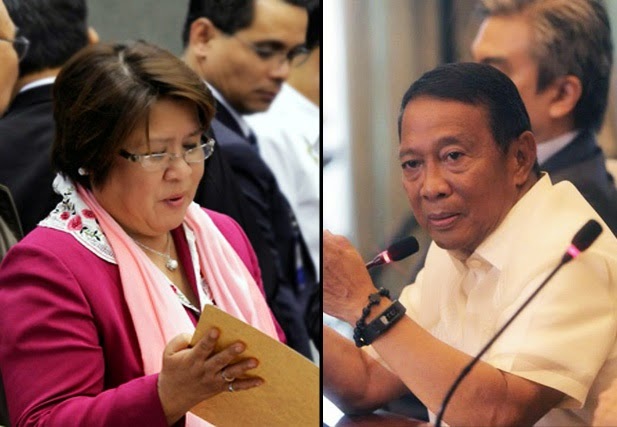
MANILA - The camp of Vice-President Jejomar Binay is not in a position to dictate what the Department of Justice can or cannot investigate, Justice Secretary Leila de Lima said Friday.

Speaking before a gathering of public attorneys in Manila led by the Public Attorney's Office (PAO), De Lima said the more Binay's camp pushes the DOJ and the National Bureau of Investigation (NBI) to halt its probe, the more doubts are raised, and the more the investigation should proceed.

"The issue here is not whether or not the DOJ can investigate the vice-president. The issue is, and will remain, whether or not the accusations of systemic corruption in Makati and the amassing ill-gotten wealth are true," she said.

"If the subject of the investigation asks the DOJ to stop, for one reason or another, the commonsense response is not to grant the request but to do the exact opposite: pursue the investigation even further," she added.


De Lima directed the NBI on Thursday to investigate Binay, his family, his alleged dummies, contractors of Makati City projects, and their alleged cohorts in a scheme of plundering the city's coffers. The accusations were made public by Binay's former ally, ex-Makati Vice-Mayor Ernesto Mercado, and several other individuals.

Binay's camp hit the DOJ for ordering the probe, accusing De Lima of engaging in a "political circus," and threatening her of disbarment.

Binay's spokespersons said the DOJ has no jurisdiction over the issue because the vice-president is an impeachable officer.

De Lima, however, said Binay's camp is not in the position to define nor limit her department's powers to investigate.

"It is not up to him (Binay) or his spokespersons to determine the limits of the department's power to investigate impeachable officers; it is only the Supreme Court that can interpret the department's powers of investigation under the law," she said.

"It is also in the same spirit of performing our mandate under the Administrative Code that we are, therefore, now minded to do our own investigation parallel to that of the [Senate Blue Ribbon Committee] and the Ombudsman."

ANSWER ACCUSATIONS

De Lima challenged Binay's camp to answer the allegations instead of raising "irrelevant" matters and accusing the DOJ of politicking.

She stressed that the public deserves to know the truth and this is what Binay, as a public official, should give them instead of "reckless innuendos."

These innuendos do not prove Binay's innocence nor disprove the claims agains him, she stressed.

Binay, in several media interviews and speaking engagements, accused administration allies of conspiring to douse his 2016 presidential bid; he also hit the administration of not dealing with the country's "real problems."

"Rather than question the department's (DOJ's) jurisdiction and priorities, the vice-president should instead directly confront the allegations on the systemic corruption of Makati's procurement system. Rather than question the legal basis for the [Disbursement Acceleration Program], he should confront accusations of amassing ill-gotten wealth," De Lima said.

"To say that the DAP was used by [Budget Secretary Butch Abad] to bribe senators is not a valid defense against the accusations of corruption in Makati. To claim that President [Gloria] Arroyo is innocent and merely being persecuted by this administration despite her illness is not a convincing response to testimonial evidence of unprecedented plunder of local government coffers. To say that he once fed his vice-mayor [Ernesto Mercado] from his own hands only for Mercado to turn against him and that he (Mercado) has 'no utang na loob' is definitely not the best way to impeach a witness."

"To question why I did not release the supposed 5-hour video of Janet Lim Napoles -- and I'm not admitting to the existence of that video 'spilling the beans on administration allies' -- it will never rebut the COA (Commission on Audit) findings of overpricing of hospital beds and medical equipment. To expose the alleged luxury vehicles of Sen. [Antonio] Trillanes will never explain the airconditioned piggery and English garden inside a 350-hectare estate."

"They have said everything except the one thing we really, really seek and need: the truth."

As to the criticism that the DOJ should focus on over investigations and cases, De Lima said Binay's camp should not tell the department what to do and how to do its job.

She stressed that the department should not be selective in its investigations, especially those involving allegations of corruption against government officials.

"Let our record speak for us. In the past 4 years, the DOJ has never shied away from investigating and prosecuting the most controversial cases involving the most powerful politicians and officials. The DOJ investigated a former president (Arroyo), 3 sitting senators (Senators Juan Ponce Enrile, Bong Revilla, and Jinggoy Estrada), aside from several congressmen and executive officials and is investigating more. That the case is high profile or involves a powerful politician was never a reason for the DOJ to inhibit from conducting a probe."

"Definitely, it's not a reason for the DOJ to refrain from investigating now. This case is no different. Why would the DOJ now shy away from another investigation of another case of alleged corruption and plunder? If the DOJ does refrain from investigating now, would it not constitute a case of special treatment or dereliction of duty?" De Lima said.

If Binay has nothing to hide, he should welcome the investigation, considering that he has already expressed lack of faith in the ongoing Senate inquiry into the alleged overpricing of Makati City projects and his alleged unexplained wealth, she added.

De Lima also stressed that Binay's camp cannot invoke his so-called immunity from suit in criticizing her move to call for the probe since the NBI investigation will cover not only the vice-president but all those allegedly involved in the "unprecedented corruption allegations" in Makati, all of whom cannot claim any immunity from criminal proceedings.

source: www.abs-cbnnews.com

Friday, May 2, 2014

Group eyes SC help to open Napoles list


MANILA – A whistleblowers group on Friday said it will ask the Supreme Court (SC) to order Justice Secretary Leila de Lima to finally release the copy of Janet Lim Napoles' list of people supposedly involved in the pork barrel scam.

Whistleblowers Association of the Philippines President Sandra Cam said her group will file a petition for mandamus before the SC next week to order de Lima to make the list public.

The supposed list is contained in the sworn statement that Napoles earlier submitted to de Lima following her decision to ''tell all'' that she knows about the scam.

"Ako ay nagcha-challenge sa kanya ng face off para makita kung sino sa amin ang nagsisinungaling pagdating diyan sa mga dokumento na dapat niyang ilutang sa publiko dahil binabayaran siya ni Juan dela Cruz,'' Cam told dzMM.

"Sobra na itong ginagawa ng secretary of Justice... Lalabas kami kahit sa tingin niya ay maliliit na tao lang kami... Lalaban kami sa posisyon na ito dahil nakakaawa na ang taumbayan."

In an earlier newspaper report, Cam claimed to have been given a copy of the list, in which several names of lawmakers who were previously not implicated in the scam appeared.

Cam said she would like to check if the list in de Lima's hands has been sanitized of Aquino allies.

De Lima belittled Cam's claim, saying the latter had no authority and standing on the issue.

The justice chief had said she will ask Napoles' camp if, indeed, it gave out lists to other people, saying she is not aware of it.

She added she would not to bow down to pressure stemming from reports about Napoles' list being released by various quarters.

She believes this is part of the reason why "lists" are coming out, precisely to pressure her into releasing the names Napoles gave her.

source: www.abs-cbnnews.com

Wednesday, May 8, 2013

SC stops extension of liquor ban during polls

MANILA – The Supreme Court has once again stopped the Commission on Elections (Comelec) from implementing a resolution, this time on the extension of the liquor ban.

In a press conference, SC spokesman Theodore Te said the high court issued a temporary restraining order (TRO) on the five-day liquor ban – which is supposed to start tomorrow, May 9.

This means the liquor ban will only start May 12 until May 13.

The high court said the poll body acted without notifying affected parties. The Comelec was ordered to file its comment by tomorrow.

source: www.abs-cbnnews.com

Monday, December 17, 2012

Rape case vs Ang Dating Daan's Bro. Eli to proceed

The Court of Appeals (CA) has junked televangelist Eliseo Fernando "Bro. Eli" Soriano's bid for the dismissal of rape charges against him pending before a Pampanga trial court.

In a 3-page resolution penned by Associate Justice Angelita Gacutan, the appellate court's former 12th Division junked Soriano's motion for reconsideration (MR) on its ruling dated May 31 that dismissed his petition against Macabebe Regional Trial Court (RTC) Judge Lucina Dayaon.

The appellate court pointed out that Soriano was unable to present new arguments in his MR to warrant a reversal of the earlier ruling.

“A perusal of the [MR] shows that it is a mere rehash of his previous arguments which we have sufficiently discussed and passed upon in our decision…,” the resolution read.

Soriano, head of the Ang Dating Daan and presiding minister of the Philippines-based Christian organization Members Church of God International, was indicted on rape charges in 2006 filed by Daniel Veridiano, a member of his staff.

Veridiano alleged that Soriano sexually assaulted him on 2 separate occasions in Apalit, Pampanga.

Judge Dayaon issued a warrant for Soriano's arrest; Soriano subsequently posted bail.

Soriano elevated his case before the appellate court.

In its latest ruling, the appellate court also held that it could not pass upon Soriano's "new allegations" against Veridiano.

“He attacks complainant Veridiano’s character by claiming that [Veridiano] was involved in misappropriation of funds and molestation of minors... However, we cannot pass upon these belated accusations as this court is not a trier of facts. Such duty belongs to the trial courts where the said charges may be pending," the resolution read.

Associate Justices Magdangal De Leon and Francisco Acosta concurred in the ruling.

Sought for comment, Ang Dating Daan referred ABS-CBN to the UNTV legal department.

Atty. Alfredito Forteza, who said he represents Soriano, said the CA decision was based on a technicality and not on the merits of the case.

He said Soriano will appeal the CA ruling before the Supreme Court.

source: abs-cbnnews.com

Friday, November 9, 2012

Sharon's petition vs Bandera editors junked


The Supreme Court (SC) reinstated the ruling of a Mandaluyong City Regional Trial Court (RTC) that dismissed the libel case filed by singer-actress Sharon Cuneta against the editor and associate editor of tabloid newspaper, Bandera.

In a 19-page decision by the 3rd Division penned by Associate Justice Diosdado Peralta released to the media on Thursday, the high court reversed the Court of Appeals (CA) in giving the green light for the lower court to push through with the trial of Lito Bautista and Jimmy Alcantara.

The high court ruled that the actress “took a procedural misstep, and the view she is advancing is erroneous” because it should have been the Office of the Solicitor General (OSG), not her, who should have appealed the lower court's decision. The high court said the petition before the appellate court should have been dismissed on this basis alone.

“[I]n criminal cases, the acquittal of the accused or the dismissal of the case against him can only be appealed by the Solicitor-General, acting on behalf of the State…The capability of the private complainant to question such dismissal or acquittal is limited only to the civil aspect of the case.

“Respondent [Cuneta] lacked the personality or legal standing to question the trial court’s order because it is only the OSG who can bring actions on behalf of the State in criminal proceedings, before the Supreme Court and CA," the decision read.

The high court pointed out that the petition filed before the appellate court questioned the criminal aspect of the RTC order, not its civil aspect.

Cuneta sued Bautista, Alcantara and writer Pete Ampoloquio for an article written by Ampoloquio for Bandera in 2001. Cuneta alleged that the article maligned her reputation by claiming that she had treated a supporter of her husband, Sen. Francis Pangilinan, badly.

source: abs-cbnnews.com

Wednesday, October 10, 2012

Palace: Time-bound TRO on cybercrime law a 'signal'


MANILA, Philippines - Lawmakers should use the 120-day temporary restraining order (TRO) issued by the Supreme Court to amend the contentious provisions in the Anti-Cybercrime Law, Malacañang said.

In a press conference, Presidential spokesperson Edwin Lacierda said that the halt order, which has a shelf life of 120 days, is already a “signal” from the SC that it sees flaws in the law.

"That 120 days perhaps is a signal by the Supreme Court to Congress it may want to amend the law because this is the first time or a very rare time when [it] issued a TRO [with a shelf life]. Again, perhaps this is a signal to the legislature if you would like to finalize whatever amendments you wish to do," he said.

Lacierda said the 120 days should be used by the lawmakers to finalize what they have voiced out only after the law was implemented.

The controversial law went into effect on October 3, only to be halted by the SC for 120 days ending on February 6, 2013.

Some lawmakers, including senators, only saw the need for amendments after they passed the law. Netizens have lashed at the libel provision as well as the additional powers given to the Department of Justice.

Lacierda said the halt order is just a “temporary setback” in the fight against cyber crimes.

"Obviously, we are stymied in the sense that we cannot use this law to file cases against those criminals," he said.

source: abs-cbnnews.com

Tuesday, October 9, 2012

SC issues 120-day TRO vs cybercrime law

MANILA, Philippines - The Supreme Court on Tuesday unanimously issued a 120-day temporary restraining order (TRO) on the entire Cybercrime Prevention Act of 2012 or Republic Act 10175.

The halt order is effective immediately. Based on a formula, the 120 days may end February 6, 2013.

The SC Public Information Office confirmed the news around 5:20 p.m. today.

In an order dated Oct. 9, 2012, the high court will deliberate on the issues via oral arguments on January 15, 2013.

Consolidating all 15 petitions that questioned the law, the high court also ordered the respondents, led by government offices and their chiefs, to file a comment within ten days upon receipt of the notice. The government offices are represented by the Office of the Solicitor General.

This is one of the rare occasions that SC issued a halt order with a shelf life. Usually, TRO issuances are effective until a final decision.

The TRO stopped law enforcement agencies such as the Department of Justice, the National Bureau of Investigation and even the Department of Science and Technology (DOST) from implementing the entire law, not just the controversial provisions, such as the libel clause.

Meantime, Malacañang said it respects the reported issuance of a TRO by the Supreme Court on the anti-cybercrime law, adding that it would like to see a copy of the TRO to see which provisions are covered by the restraining order.

“The administration will always respect the legal processes that are issued by the court. We would like to take a look at the specifics of the TRO,” deputy presidential spokesperson Abigail Valte said.

TRO hailed

Several lawmakers and various groups hailed the SC's issuance of a TRO.

In a statement, Sen. Teofisto “TG” Guingona said the 120-day TRO is “the first victory of the people and of freedom of expression.”

“For a court to issue a TRO unanimously is a strong message of its belief that the dangers and fears of the people are real and must be addressed. With this TRO, the tyrannical powers granted by the law are effectively clipped,” said Guingona, the only senator who voted against the controversial law.

House Deputy Speaker and Quezon City 4th District Rep. Erin Tañada, and Sen. Pia Cayetano, who were among those who have filed petitions questioning several provisions of the law, also welcomed the SC’s issuance of a TRO.

Tañada said the TRO gives justices more time to carefully review the Cybercrime Law, particularly the issues pertaining to cyber libel.

Cayetano said the SC order “opens a window of opportunity for Congress to revisit the law and work for the amendment and/or repeal of its questionable provisions.”

'A big win'

The National Union of Journalists of the Philippines (NUJP), the Center for International Law (Centerlaw) and the Human Rights Watch also welcomed the SC TRO.

NUJP Secretary-General Rowena Paraan said the stay order was “the very least that the High Court can do confronted with a blatantly unconstitutional and repressive law.”

“We congratulate the members of media, bloggers, netizens, human rights groups, people's organizations, progressive legislators and the many others who have defiantly stood up, spoke and fought against this latest assault on our hard-won freedoms,” she added.

Human rights lawyer Harry Roque of Centerlaw said the TRO was a “big win” for the people.

“The TRO reaffirmed the view submitted by the petitioners that the law is unconstitutional for being violative of the rights to freedom of expression, and the due process and equal protection clauses of the Constitution,” he said.

Human Rights Watch Asia Director Brad Adams also commended the SC for issuing the TRO, but said “the court should now go further by striking down this seriously flawed law.”

Adams said, “Congress, if it still wants to have a law governing online activity, should ensure that such a law will not infringe on civil liberties, human rights, the Constitution and the Philippines's obligations under international law. All provisions in Philippine law that allow for imprisonment for peaceful expression should be repealed.”

‘Battle is not yet over’

“The battle to defend our basic rights is far from over. The 120-day TRO gives a brief respite but the protests must continue,” NUJP said.

The group called on the SC to declare the law null and unconstitutional in its final decision, and the legislators to decriminalize libel.

The NUJP, Guingona and Roque also reminded the public to remain vigilant.

Guingona said, “Now, we must escalate our vigilance, keep the fire burning, and continue the fight for our fundamental rights. The fight of the people, on the streets and online, must continue.”

Roque likewise said, “We ask the citizenry to remain vigilant as the challenge today is to make the TRO permanent by convincing the Court to declare the Cybercrime law unconstitutional. We hope the DOJ and the authors of the law will take heed and forthwith repeal the law even before the Court issues a final verdict on the merits.”

Cayetano also urged the public, most especially netizens and bloggers, to monitor and participate in the public hearings. -- with a report from Willard Cheng, ABS-CBN News

source: abs-cbnnews.com

Saturday, October 6, 2012

Bayan: Cybercrime law dialogue ill-timed, deceiving

MANILA - The Bagong Alyansang Makabayan (Bayan) accused Malacañang of "drawing attention from the Supreme Court (SC)" and "deceiving the people" with the setting of a multi-sectoral dialogue on Oct. 9 between the DOJ and stakeholders on Republic Act (RA) No. 10175, also known as the Cybercrime Prevention Act of 2012, and its Implementing Rules and Regulations (IRR).

In a statement issued by its secretary-general, Renato Reyes, Jr., Bayan said the dialogue was ill-timed since it coincided with the high court's regular Tuesday en banc session. Petitions against the controversial law are set to be discussed in next week's session, including petitioners' application for a temporary restraining order (TRO) and/or writ of preliminary injunction to restrain government from implementing assailed provisions of the law which petitioners want declared unconstitutional.

"We find it very strange that Malacanang would set a dialogue between the DOJ and critics of the Cybercrime Law on Oct. 9, the same day the SC is expected to decide on the TRO vs. the new law. Wala na bang ibang petsa, DOJ? As petitioners in the case, we're concerned that Malacanang is trying to draw attention away from the SC and lure the critics into accepting the IRR of the new law," Bayan said.

At least 10 separate petitions have been filed with the high court questioning the following provisions:

-- Sec. 4(c)(4), which criminalizes libel on cyberspace;
-- Sec. 5(a), which lists "aiding or abetting in the Commission of Cybercrime" as an additional offense under the law;
-- Sec. 6, which raises by one degree higher the penalties provided for by the Revised Penal Code for all crimes committed through and with the use of information and communications;

-- Sec. 7, which provides that apart from prosecution under the law, any person charged for the alleged offense covered will not be spared from violations of the Revised Penal Code and other special laws;
-- Sec. 12, which authorizes law enforcement authorities to collect or record, by technical or electronic means, traffic data in real-time; -

-- Sec. 14, which authorizes law enforcement authorities, armed with a court warrant, to require "any person or service provider to disclose or submit subscriber's information, traffic data or relevant data in his/its possession or control within 72 hours from receipt of the order in relation to a valid complaint officially docketed and assigned for investigation;"
-- Sec. 15, which authorizes law enforcement authorities to search, seize and examine computer data;

-- Sec. 19, which authorizes the Dept. of Justice (DOJ) to block access to computer data when such data "is prima facie found to be in violation of the provisions of this Act;"
-- Sec. 20, which states that those who fail to comply with provisions of the law's Chapter IV (Enforcement and Implementation), specifically orders from law enforcement agencies, shall face imprisonment of prision correctional (6 months and 1 day to 6 years) in its maximum period or a fine of P100,000 or both, for each noncompliance;

-- Sec. 24, which creates, beginning effectivity of the law on Oct. 3, an inter-agency body under the Office of the President (OP) to be known as the Cybercrime Investigation and Coordinating Center (CICC) for "policy coordination" and "formulation and enforcement of the national cybersecurity plan;"
-- Sec. 26(a), which details the powers and functions of the CICC;

-- Sec. 28, which provides for the crafting of the law's Implementing Rules and Regulations (IRR) by the Dept. of Science and Technology (DOST), DOJ, and the Dept. of Interior and Local Govt. (DILG); and
-- Sec. 29, pertaining to the separability clause which shields provisions of the law not rendered invalid from any declaration of invalidity by a competent court.

Echoing the words of constitutionalist Fr. Joaquin Bernas, Bayan said "[t]he IRR cannot cure the infirmities of the law."

In his recent Philippine Daily Inquirer column, Bernas said, "It will not do to say that whatever shortcomings there are in RA 10175 (Cybercrime Prevention Act) will be remedied by its IRR (implementing rules and regulations). Rules and regulations cannot cure defects in a law."

Bayan said "any dialogue with the DOJ at this point would be within the framework of the oppressive provisions of the law," adding, "The Palace is trying desperately to deceive the people."

'Forum will clarify provisions being opposed''

During the dialogue/forum on Oct. 9, the DOJ and the Information and Communications Technology Office of the Dept. of Science and Technology (DOST) assured stakeholders that aside from presenting and discussing key provisions of the law, they will also "listen to inputs and insights for the IRR."

Justice Sec. Leila De Lima said the forum is intended "for concerned parties to ask for clarifications and to suggest how the law can be made effective to address the problem of cybercrime."

"There is no doubt that the State needs to protect the internet from unscrupulous individuals and organized crime groups," De Lima said.

Those expected to be present during the forum are the following:

- Internet Society (Philippines Chapter);
- University of the Philippines (UP) College of Law;
- La Salle Institute for Governance;

- Foundation for Media Alternatives;
- Globe Telecommunications;
- Imperium Technologies;

- Philippine Software Industry Association;
- Business Processing Association of the Philippines;
- Philippine Computer Emergency Response Team;

- IdeaCorp Philippines;
- National Security Council;
- National Defense College of the Philippines; and
- Freelance Writers Guild of the Philippines.

Representatives from the National Bureau of Investigation (NBI), DOJ National Prosecution Service (NPS), Public Attorney's Office (PAO), and Bureau of Corrections (BuCor) will also be present.

Rep. Sigfrido Tinga, chairman of the House Committee on Information and Communications Technology, and ICT Office executive director, Undersecretary Louis Napoleon Casambre, are expected to give brief remarks. A review of the legislative history of the law will be done by Damian Domingo Mapa, former Commissioner of the Commission on Information and Communications Technology (CICT).

The DOJ said only pre-registered participants will be allowed inside the DOJ Multi-purpose Hall, the venue for the event, due to limited space.

A live webcast of the proceedings will be made available on www.doj.gov.ph.

source: abs-cbnnews.com

SC gets 11th petition against Cybercrime law


MANILA, Philippines - The Supreme Court on Friday received its 11th petition against Republic Act (RA) No. 10175, also known as the Cybercrime Prevention Act of 2012, signed into law by President Aquino last September 12.

In its 61-page petition, the Philippine Bar Association, Inc. questioned Sections 4(c)(4), 5, 6, 7, 12, 19 of the Cybercrime Prevention Act and asked the high court to issue a temporary restraining order and/ or writ of preliminary injunction to restrain government from further implementing the law.


-- Sec. 4(c)(4), which criminalizes libel on cyberspace;
-- Sec. 5 lists "aiding or abetting in the commission of cybercrime" and "attempt in the commission of cybercrime" as additional offenses;
-- Sec. 6, which raises by one degree higher the penalties provided for by the Revised Penal Code for all crimes committed through and with the use of information and communications;
-- Sec. 7, which provides that apart from prosecution under the law, any person charged for the alleged offense covered will not be spared from violations of the Revised Penal Code and other special laws; and
-- Sec. 12, which authorizes law enforcement authorities to collect or record, by technical or electronic means, traffic data in real-time;
-- -- Sec. 19, which authorizes the Dept. of Justice (DOJ) to block access to computer data when such data "is prima facie found to be in violation of the provisions of this Act."

source: abs-cbnnews.com

Wednesday, October 3, 2012

Ateneo group backs 8th petition vs anti-cybercrime law


MANILA, Philippines - An 8th petition against Republic Act (RA) No. 10175, also known as the Cybercrime Prevention Act, was filed with the Supreme Court (SC) on Wednesday morning by faculty members of the Ateneo De Manila University (ADMU) College of Law and, at the same time, members of the Ateneo Human Rights Center.

In a 40-page petition for certiorari, ADMU College of Law Dean Sedfrey Candelaria, and Attys. Mel Sta. Maria, Amparita Sta. Maria, Gilbert Sembrano, and Ryan Jeremiah Quan assailed Sections 4(4), 5, 6, 7 and 19 of the law for being "patently unconstitutional," and urged the high court to immediately issue a temporary restraining order (TRO) to prevent the implementation of the questioned provisions.

"All of the above provisions, taken singularly and together, are unconstitutional, as they transgress... provisions of the Bill of Rights in Art. III of the 1987 Constitution of the Philippines," the petition read.

Sec. 4(4) of RA No. 10175 criminalizes libel on cyberspace; Sec. 5 lists "aiding or abetting in the commission of cybercrime" and "attempt in the commission of cybercrime" as additional offenses; Sec. 6 raises by one degree higher the penalties provided for by the Revised Penal Code for all crimes committed through and with the use of information and communications; Sec. 7 provides that, apart from prosecution under the law, any person charged for the alleged offense covered will not be spared from violations of the Revised Penal Code and other special laws; and Sec. 19 authorizes the Dept. of Justice (DOJ) to block access to computer data when such data "is prima facie found to be in violation of the provisions of this Act."

Petitioners said the questioned provisions transgress Sections 1 (on right to life, liberty, property, equal protection of laws), 2 (right against unreasonable searches and seizures), 3(1) (inviolability of the privacy of communication and correspondence), 4 (freedom of speech, of expression, of the press), and 21 (double jeopardy doctrine) of the 1987 Constitution.

"This is a case of transcendental importance, a first of its kind in our history. This will herald the entry of this Honorable Supreme Court into a world of cyber communication that is perpetually active, global and free... As the assailed law will immediately impact on the rights of every Filipino on the internet -- ourselves, our spouses, our children, our parents, our employes, our workers, our traders, our teachers and students -- there is urgency in this petition.

"At the same time, there is urgent need, as well as wisdom, to understanding how the internet is expanding and evolving our very concepts of free expression," the petition read.

For a more thorough discussion of their petition, petitioners urged the high court to set oral arguments on the case.

The other 7 petitions against RA No. 10175 were filed by Louis Biraogo, Disini, et al., ALAM party list, Sen. Teofisto Guingona III, Adonis, et al., Rep. Palatino, et al., and Bayan et al.

source: abs-cbnnews.com