Showing posts with label LG. Show all posts

Tuesday, April 6, 2021

LG's smartphone exit: who stands to gain?

LG Electronics' move to exit its loss-making mobile business is expected to create more opportunities for Samsung than its other rivals in the lucrative North American smartphone market, analysts said.

LG's US market share currently stands at about 10 percent, research firms Gartner and Counterpoint estimated, adding it was stronger in markets where it partnered with telecom companies to include its devices as part of a mobile plan.

"Apple tends to cater to the higher end of the (US) market; so it might grab a small portion of LG's sales," Gartner analyst Tuong Nguyen said. "It's more likely that Samsung inherits a lot of it because both vendors compete across similar markets."

Globally, LG's market share shrank to 2 percent in 2020, a massive drop from its status as the world's third-largest smartphone maker behind Samsung Electronics and Apple Inc during its peak in 2013.

The company shipped 23 million phones last year, compared with Samsung's 256 million, according to Counterpoint.

Counterpoint analyst Tarun Pathak said LG was mostly competing in the mid-tier, as its flagship phones received tepid market response.

"So it will be mostly the Chinese and mid-tier brands benefiting through the LG exit. In its key market like USA – Samsung, Motorola, HMD mostly (ZTE, Alcatel to a lesser extent) will benefit, while Xiaomi, Motorola will benefit in LATAM and Samsung in Korea," Pathak added.

Tech enthusiasts on Twitter lamented the exit of the once ubiquitous name in the smartphone industry, with many crediting LG for pioneering the now-familiar features such as ultra-wide angle camera and capacitive touchscreen in mobile devices.

"They didn't always ace every phone, but losing them means losing a competitor that was willing to try new things, even when they didn't work," popular YouTuber Marques Brownlee (@MKBHD) said in a tweet.

-reuters-

Monday, February 25, 2019

LG unveils dual-screen 5G smartphone, touts biometric breakthrough


BARCELONA -- South Korea’s LG Electronics unveiled a 5G smartphone on Sunday with a dual screen, the latest handset maker to pitch a new design feature in an effort to revive flagging sales.

The two screens on the new V50ThinQ work independently, so a user can watch a film on one screen while browsing the Internet on the other.

LG, the world's No.7 smartphone maker, saw its sales decline by a quarter last year as Chinese rivals Huawei Technologies and Xiaomi grabbed market share in a slightly weaker global market.

Both announced 5G phones in Barcelona on the eve of the Mobile World Congress, the telecoms industry's main annual get together, with Xiaomi pitching a $680 model and Huawei smashing the price ceiling with $2,600 folding phone.

LG nevertheless retains a following among those who value good video and audio quality.

Addressing those users, LG launched a second phone, the G8ThinQ, which can be unlocked without touching the screen. The handset instead uses light sensors to scan the veins in a user's hand or to recognize their face.

The phone's front-facing camera, which uses a sensor chip developed by Germany's Infineon Technologies, can scan in three dimensions - making it more secure than existing biometric methods of unlocking phones such as fingerprints.

LG product evangelist David Montanya told a launch event it would be harder to 'spoof' than the FaceID feature used in Apple's iPhone X because the vein structure in a user's hand has less than one chance in a billion of being the same as anyone else's.

Users can also activate features with gestures - for example to play or pause a song or video, or adjust the volume, by twisting their fingers, emulating the character played by Tom Cruise in science-fiction detective thriller Minority Report.

LG did not set release dates or announce prices for the new phones, but said the 5G model should hit stores in the first half of the year.

source: news.abs-cbn.com

Tuesday, January 8, 2019

With rolling and folding displays, tech firms see good times ahead


LAS VEGAS -- Electronic displays that fold, roll and bend have finally arrived after years of development, and tech firms are touting the technology as a potential source of growth and new applications.

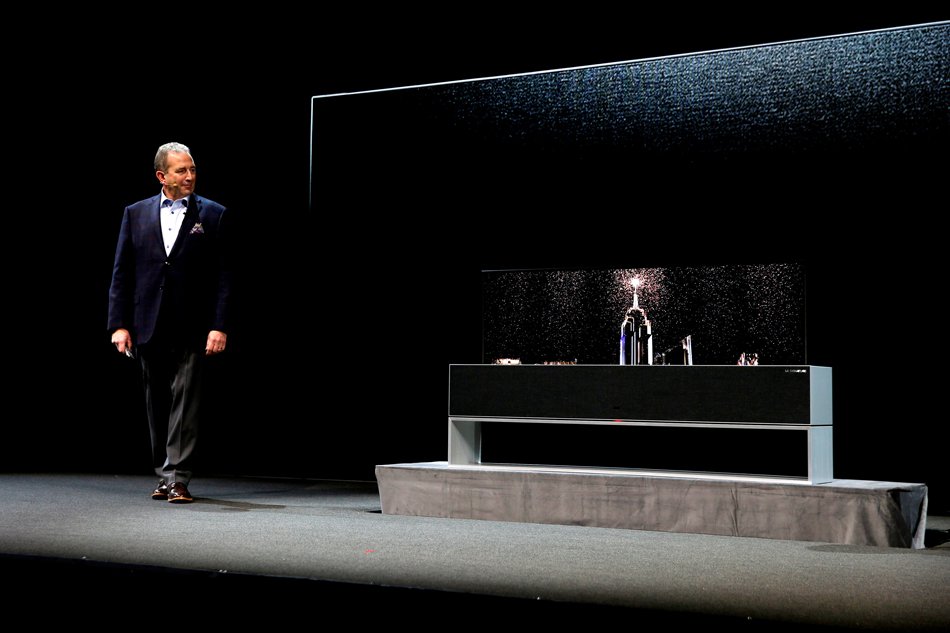
At the Consumer Electronics Show on Monday, South Korean giant LG unveiled its ultra-high definition television that rolls into and out of a base stand and can be furled and unfurled on demand.

"It brings freedom of design to a space, without the limitations of a wall," LG senior vice president of marketing David VanderWaal said while introducing the OLED TV R.

A demonstration showed that the 65-inch (165 centimeter) screen could disappear completely into the base, extend just part way to display photos, act as a control screen for smart devices, or rise completely for full viewing.

LG did not disclose pricing for the roll-up television.

Chinese startup Royole meanwhile showed off what it claimed is the first foldable smartphone, which can fit into a pocket but unfold into a full-sized tablet computer, which is available in China and now is offered in the US for $1,300.

"People want mobility but they also want large screens," Royole founder Bill Liu told a news conference as he showed the recently launched FlexPai device.

"It's really a combination of a smartphone and tablet."

Other device makers are expecting to introduce foldable handsets this year, but Liu said the technology using superthin layers with nano-sized sensors offered a lot more than just more convenient phones.

Royole showed how the same flexible displays could be used for automotive dashboards, wearables, and for various other commercial and industrial uses.

"We see this as the next generation of human-machine interface," Liu said.

"It can change the way we connect to everything."

Royole says its flexible sensor technology can be adapted for a variety of touchscreen applications with improved performance and lower costs than traditional screens.

COOL AND UNIQUE

Royole and LG were among the firms making media presentations ahead of the official opening of the January 8-11 Las Vegas event.

The two announcements could portend a wave of new products from tech firms this year and could offer a spark to a smartphone sector that has seen sluggish growth over the past year.

CES features 4,500 exhibitors across 2.75 million square feet (250,000 square meters) of exhibit space showcasing artificial intelligence, augmented and virtual reality, smart homes, smart cities, sports gadgets and other cutting-edge devices. Some 182,000 trade professionals are expected.

GlobalData research director Avi Greengart said the roll-up television appears "cool" and offers "unique technology."

"Foldable phones is going to be a big trend this year," Greengart said, noting that most of new product announcements of that ilk were likely to be saved for the upcoming Mobile World Congress in Barcelona.

Samsung is widely believed to launch a folding handset sometime this year, possibly at the Barcelona event.

Greengart said he expected the challenge to folding smartphones to be on the software side, not with the displays, since applications will have to be designed to adapt to going from phone to tablet screen sizes.

source: news.abs-cbn.com

Friday, June 15, 2018

LG's new flagship G7 ThinQ is bright and loud


MANILA - South Korea's LG on Thursday launched its flagship G7 ThinQ smartphone in the Philippines, betting on a slew of new features to give it an edge over an increasingly crowded market.

The G7 ThinQ's screen can get twice as bright as its rivals at a maximum 1,000 nits, making it visible even in direct sunlight, LG said.

But while LG blazed the trail in the tall screen trend with 2017's G6, the G7 ThinQ's screen has a notch on the top. It's a design cue from Apple's iPhone X that has since been adopted by Huawei, OnePlus and Xiaomi.

The dual cameras on the rear, which shoots in LG's signature wide angle, are now AI-equipped, allowing the phone to automatically choose the best settings depending on the subject.

Like most high-end phones released in 2018, the G7 ThinQ (pronounced thin-que) has a metal and glass body. Inside, there's a Qualcomm Snapdragon 845 processor, up to 6GB of RAM and up to 128 GB of storage

The G7 ThinQ has a 3,000 mAh battery powering the 6.1-inch QHD screen. It's at par with the Samsung Galaxy S9, which has a 5.8-inch screen, but smaller than the 4,000 mAh on the 6.1-inch Huawei P20 Pro and the 3,500 mAh on the 6.2-inch Galaxy S9+.

What sets apart the ThinQ from other dual camera systems, LG said, is that is uses a fast and bright f1.6 lens on its main shooter. The wide angle camera is no slouch either with an f1.9 lens. 

"It’s a very bright camera, and what’s great about it is that if the scene is dark, it automatically brightens it up," said Faith Mijares, marketing manager for LG smartphones.

The AI will recognize a dark scene and adjust the camera’s settings to compensate, Mijares said. The G7 ThinQ also has 19 shooting modes that range from landscapes, flowers, food to selfies, she said.

When shooting in landscape, the phone will suggest the wide angle lens, said tech blogger Abe Olandres of Yugatech.com, who previewed the unit.

Unlike a lot of other phone manufacturers today, LG opted to put just one camera up front on the G7 ThinQ. If selfies are your main concern, you might find the the phone's 8MP f.18 front camera a bit lacking. 

But while a lot of phone manufacturers have made the camera the center of their innovation, LG is one of a few brands that have also put a premium on audio.

The G7 ThinQ has a boombox feature that allows it to pump higher decibels than competing flagships. During the launch, tech journalists got to test this and despite the ambient noise of the venue, the sound from the phone was still audible.

It also retained the headphone jack and kept the 32-bit Quad DAC for crisp audio that it started with 2016's V20.

The LG G7 ThinQ is available for pre-order until June 17.

source: news.abs-cbn.com

Thursday, May 3, 2018

LG's G7 ThinQ offers AI-powered cameras, bright display


MANILA - LG on Thursday announced the seventh generation of its premium G-series phones, offering artificial intelligence-powered dual cameras, an ultra-bright display, and a screen that is stamped with an iPhone X-style notch.

The G7 ThinQ uses AI to automatically adjust the camera settings depending on the subject, a feature it first introduced on the V30S ThinQ earlier this year.

The dual cameras at the back can shoot clear pictures at night, and as in past LG devices, can take wide angle photos.

The LCD display can go as bright as 1,000 nits, nearly twice as much as competing flagships, LG said. The phone runs Qualcomm's Snapdragon 845 processor, according to the chip manufacturer.

A key on the left side of the phone, below the volume rocker, summons the Google Assistant. The AI helper can also be summoned by voice, even at a distance, without talking directly into the device, LG said.

No other specifications were available on the LG website. Pricing and availability have yet to be announced. In the Philippines, LG official stores are selling last year's flagships, the G6 and the V30+.

LG's South Korean compatriot, Samsung, has released the Galaxy S9 and S9+, also offering improved low-light cameras and a brighter display.

China's Huawei started selling last week its P20 Pro and P20 phones, with Leica-engineered triple cameras on the larger model. Both phones also have AI-assisted cameras.

source: news.abs-cbn.com

Thursday, October 19, 2017

How Huawei stacks up vs full screen mid-rangers


MANILA - Huawei's Nova 2i goes on sale this weekend, the latest entrant in the market for mid-priced handsets that offer near bezel-less displays. Here's how it stacks up against the competition.

DISPLAY


The Nova 2i and the Vivo V7+ both offer 5.99-inch displays that occupy almost the entire front of the device. LG's Q6 has a smaller 5.5-inch display. All panels are in full HD.

CAMERAS

There are 4 cameras on the Nova 2i, a 16MP lens on the back and a 13MP shooter on the front, each paired with a 2MP lens that captures depth of field. Vivo's V7+ has a 24MP front camera for clearer selfies and a 16MP rear camera. The Q6 has a 13MP rear camera and its front camera allows face recognition to unlock the device.

PRICE

The Nova 2i retails for P14,990, less expensive compared to the P17,990 V7+ but pricier than the Q6 at P12,990.


OTHER SPECIFICATIONS

The Nova 2i and the V7+ have nearly identical battery capacities at 3,240 mAh and 3,225mAh, respectively. The Q6 has a 3,000 mAh cell. 

The Huawei and Vivo phones have rear mounted fingerprint sensors.

Samsung brought the near bezel-less design to the mainstream earlier this year with its Galaxy S8 and S8+, as it sought to rebuild its reputation after it recalled the Galaxy Note 7 in late 2016 due to faulty batteries.

The Korean electronics giant followed it up with the Galaxy Note 8. Apple will release its own full screen phone later in the year, the iPhone X.

source: news.abs-cbn.com

Thursday, September 14, 2017

6 iPhone X alternatives that don't cost $1,000

MANILA - The iPhone X is Apple's most expensive smartphone yet, starting at $1,000 or roughly P50,000.

The steep price is even more painful in developing countries like the Philippines, where the asking price for the base model is equivalent to 100 days of minimum wage.

But the edge-to-edge screen of the 10th anniversary iPhone can be had at a lower cost, and even sooner, before the iPhone X's November release.

Here are some Android-powered handsets that offer the "all screen" experience to satisfy gadget lust, while leaving some change for utilities and more important expenses:

SAMSUNG GALAXY S8/S8+


Samsung was among the first to sell wraparound displays this year, adding its signature "edge" to the sides of the S8 and S8 Plus, which retail for P39,990 and P45,990 respectively.

LG G6


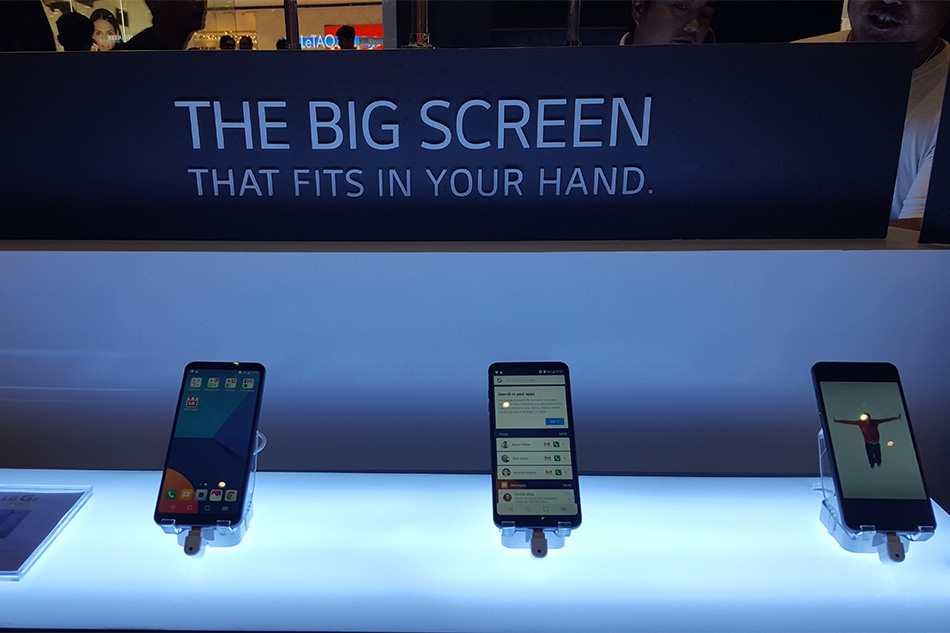
Largely overshadowed by Samsung's flagship which launched at around the same time last April, LG's G6 offers a big-screen experience that fits comfortably in the hand. It is also cheaper at P29,990

LG Q6


At at even lower price tag of P12,990, the Korean company offers the same full screen experience on the G6 in a slightly smaller package with dialed-down specs.

A host of other devices that are currently unavailable locally also offer the near bezel-less screen at a price that undercuts the iPhone X. These include:

Essential Phone


Essential, founded by Android creator Andy Rubin, released this year its first eponymous handset made of ceramic and titanium that also offers modular functionality. It is available in the US for $699 (P35,620).

Xiaomi Mi Mix 2


Chinese upstart Xiaomi beat larger manufacturers to the full-screen game with 2016's Mi Mix, and this year's sequel packs upgraded specs at a lower price of 3,299 yuan (P25,000)

LG V30


LG has not officially announced the pricing for its fall season flagship that closely resembles the pebble-shaped iPhone X, but tech websites said it might be lower than $1,000 dollars.

The V30 will likely be sold locally like its predecessors, the V10 and the V20, which did not breach the P40,000-mark.

source: news.abs-cbn.com

Saturday, April 29, 2017

LG launches flagship 'social media phone' G6


MANILA -- LG Electronics recently launched its newest flagship smartphone, the LG G6, in the Philippines at the SM Megamall Fashion Hall.

The launch was attended by tech bloggers, social media influencers, and celebrities, including Sponge Cola's lead vocalist Yael Yuzon, Sharlene San Pedro, Luis Hontiveros, Khalil Ramos, and members of the band Hale.

Dubbed as a "social media phone," the LG G6 is an all-around gadget, says Yuzon, who is particularly impressed with the phone's superior camera and music player.

"In the world of social media, we interact with people, we download songs. Tapos you're gonna want to listen to it the right way. So having this is like having a vinyl player that fits in your pocket," Yuzon adds.

"I'm Drunk, I Love You" director JP Habac, meanwhile, notes that the phone has features that allow users to create high-definition videos. He even used it to shoot a short film around the University of the Philippines-Diliman, revisiting some of the locations used in the hit movie.

Top quality specs


The LG G6 comes with a 5.7-inch QHD+ FullVision display, and for the first time ever in a smartphone, an 18:9 screen-to-body ratio. This format, LG explains, gives users a broader viewing space and a more immersive experience when streaming videos and playing games.

In addition, the LG G6 is equipped with Dolby Vision technology and HDR 10, both of which are standards for high dynamic range.

It also sports dual 13MP rear cameras and a wide-angle 5MP front camera. Most importantly, it is water- and dust-resistant, making it a handy and adventure-ready mobile gadget.

Powered by a Qualcomm Snapdragon 821 processor, the LG G6 runs on the latest version of Google's mobile operating system, Android 7.0 Nougat. The unit is now available in the Philippines in Astro Black, Ice Premium and Mystic White for P37,990.

From April 17 to 30, buyers can avail of LG's pre-order promo, and get exclusive freebies worth P8,990, as well as a one-year extended warranty.


For more details about the LG G6, visit lg.com/ph or check out their social media accounts: Facebook, Twitter, and Instagram.


NOTE: BrandNews articles are promotional features from our sponsors and not news articles from our editorial staff.

source: news.abs-cbn.com

Tuesday, April 18, 2017

iPhone 8 design could be throwback to iPhone 4: report


MANILA - The 10th anniversary edition of Apple’s iPhone, which will be unveiled later this year, could be reminiscent of 2010’s iPhone 4, according to a report on Tuesday.

A stainless steel band will frame phone’s giant screen and glass black, according to Japanese fan blog Macotakara, which had accurately predicted last March’s red iPhone, the demise of the clickable home button, and the “jet black” color option for last year’s iPhone 7 line.

Apple used a glass-on-glass design for the iPhone for two years, 2010’s iPhone 4 and 2011’s iPhone 4s. It has used an aluminum shell for its most profitable product since 2012.

The dual lenses on the back camera of this year's iPhone will be arranged vertically, instead of horizontally, as on last year’s iPhone 7 Plus, according to the report.

Cupertino, California-based Apple is rumored to launch this year a 10th anniversary “iPhone 8” or “iPhone Edition,” which will feature a screen that occupies almost the entire front face of the device.

Rivals Samsung and LG unveiled “all screen” phones earlier this year. Both the Samsung Galaxy S8 and the LG G6 feature glass on glass designs.


Alongside the “iPhone 8,” Apple will reportedly launch the iPhone 7s and 7s Plus, indicating a largely similar design from the previous year but with upgraded internals.

The Macotakara report said the 7s and 7s Plus would be slightly thicker, meaning some cases for last year’s model might not fit.

source: news.abs-cbn.com

Thursday, January 5, 2017

'Wallpaper' thin TV grabs spotlight at CES gadget gala


LAS VEGAS - LG Electronics showed off a "wallpaper" thin television as TV makers vied for the spotlight ahead of the Consumer Electronics Show officially opening here on Thursday.

As in years past, the South Korean consumer electronics giant staked out the opening slot in a day rich with back-to-back press briefings by industry titans.

LG and rivals touched on hot themes at this year's show -- including robots, appliances equipped with artificial intelligence, and self-driving car technology.

A surprise star of the presentation was a strikingly thin LG Signature OLED flat-screen television simply branded "W."

The super high-definition TV measured just 2.57 mm thick in a 65-inch screen model. LG boasted that a larger screen model garnered a CES Best of Innovation Award.

"Why the 'W'?" LG Electronics USA marketing vice president David VanderWaal asked rhetorically during the presentation.

"Wallpaper. Window. Wow," he said.

The screens are designed to affix to walls with magnetic brackets, protruding less than 4 mm.

TCL OUT TO GROW

China's fast-growing television-maker TCL was at the show with a mission to expand its market.

TCL unveiled 25 new Roku-enabled TV models heading for North America, boasting improved high-definition imagery and enhanced audio.

"We are here today because we are investing in the future of technology, specifically smart TVs," TCL marketing executive Ranjit Gopi said during a press briefing.

"We are, as of 2016, one of the fastest growing brands in the world."

TCL partners include internet titan Google and its Android TV offering.

TCL is investing some $7.7 billion in high-quality television screens and is aiming to make the world's slimmest curved television, according to Gopi.

He introduced a new flagship "X" series television that will launch first in China and then be rolled out elsewhere.

South Korean consumer electronics giant Samsung unveiled a new 75-inch QLED TV model at its CES press gathering, along with a company-first gaming laptop.

"Despite some challenges, we've made big strides in 2016, gaining market share in TVs, home appliances, wearables and smartphones," said Samsung Electronics America chief operating officer Tim Baxter.

"We are delivering on our vision of the future – one that is powered by connected and elegantly-designed products and services that put consumers firmly at the center."

EYE-GRABBING SCREENS

Samsung ramped up its smart TV platform with an offering tailored for sports lovers, and added a new entertainment application. Features in the new models included being able to recognize who is speaking while being commanded by voice.

Sales of televisions globally have been slipping, a seeming result of viewers turning to smartphones, tablets, and computers for video, according to Steve Koenig, senior director of market research at the US Consumer Technology Association trade group behind CES.

Koenig forecast that $105 billion will be spent this year on televisions, down from $108 billion last year.

However, those who do buy televisions are expected to prefer 4K high-definition models, with the number of those screens sold jumping to nearly 82 million this year compared with just shy of 53 million last year, according to Koenig.

source: news.abs-cbn.com

Thursday, October 25, 2012

LG rolls out 84-inch Ultra HD TV for $19,999.99


First there was tube-TV. Then came flat-screen, followed by high-def.

Now comes the latest — Ultra HD.

Will it be a hit, or flop like 3-D?

On Thursday, LG will begin selling an 84-inch Ultra HD TV at the Video & Audio Center in Lawndale, the first time that the next-generation TV technology will go on sale in the U.S.

Ultra HD is the branding term for TV sets with roughly four times the resolution of 1080p HD TVs. Ultra HD TVs promise to bring the clarity you see on 40-inch HD TVs to sets with screens larger than 60 inches.

That’s good news because the average size of TV screens has been steadily climbing. But as big-screen TV viewers know, picture quality diminishes as the screen gets larger.

Not surprisingly, LG’s 84-inch Ultra HD TV is an expensive piece of technology. It retails for $19,999.99.

Sony too has an Ultra HD set on the way next month, the 84-inch XBR Ultra HD 4K TV, and it’s even more expensive — going for $24,999.99.

As with all new TV technology, prices are expected to come down quickly as time passes, but the question remains whether consumers will flock to Ultra HD technology or treat it like another novelty the way they have with the 3-D TV.

I got a chance to check out both sets, and although it will take time for Ultra HD to go mainstream, it may have a higher chance at widespread adoption than 3-D.

For starters, you don't need glasses to appreciate Ultra HD TVs.

Ultra HD content looks perfect whether you're 2 feet or 20 feet away from the screen. The more than 8 million pixels these TVs have take advantage of the screens' real estate and deliver an image that is particularly impressive with landscapes.

A view of Paris at night seemed as though I was there as I discerned lights from each building's windows. A video of a coastline from atop a cliff made me feel as if I were on the bluff looking down watching the waves hit the beach.

One drawback to Ultra HD TVs at the moment is lack of content that can truly take advantage of the super high resolution. But fortunately, Ultra HD sets are capable of converting what you already watch.

That means Blu-ray movies, Netflix, cable TV shows and video games will work with the new-age TVs with no problem, albeit they will look grainier than so-called native Ultra HD content shot at Ultra HD resolutions.

The LG and the Sony Ultra HD sets benefit from having smart TV apps and having the capability to display images in 3-D.

Both come with passive, lightweight 3-D glasses that enable you to watch content from many viewing angles without losing quality. They can also convert two-dimensional content to 3-D.

Additionally, the sets are Internet connected. On the LG, I was able to test out YouTube, which worked quickly and with no snags.

For now, Ultra HD TV is mainly reserved for the affluent and the hard-core technophile who likes to be first with the latest gadget.

But two years from now, when it's time for the 2014 World Cup and Winter Olympics, you might want to consider getting one.

By then, prices should have come down and smaller Ultra HD sets that will more realistically fit in your living room might be on sale. Additionally, Ultra HD content should be more widely available by then.

source: latimes.com